English
 Español
 tiếng việt
 русский
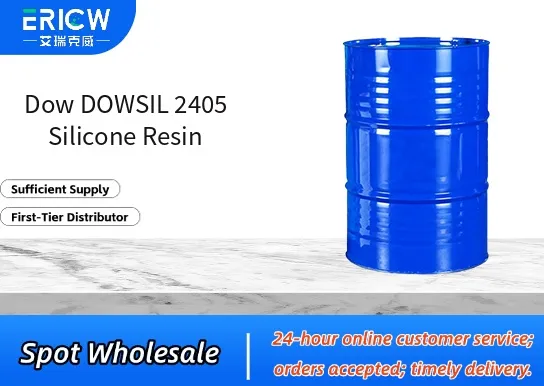
High thermal stability with continuous service up to 200 °C.
Excellent electrical insulation properties across wide temperature and frequency ranges.
Good compatibility with organic resins, enabling hybrid formulation flexibility.
Low surface energy providing inherent hydrophobicity and release characteristics.
Solvent-based liquid format for easy integration into coating, impregnation, and casting processes.
Electrical insulation coatings for motors, transformers, and coil windings.
High-temperature protective coatings for industrial metal substrates.
Matrix resin in silicone-modified varnishes and impregnating compounds.
Binders in high-performance abrasive and refractory applications.
Base resin for heat-resistant adhesives and sealants requiring long-term aging stability.
| Chemical Type | Phenyl-methyl silicone resin |
| Product Form | Liquid solution (toluene/xylene solvent blend) |
| Appearance | Clear, colorless to pale yellow liquid |
| Non-Volatile Content | Approx. 60–65 wt% |
| Viscosity (25 °C) | 100–200 mPa·s |
| Density (25 °C) | 0.92–0.96 g/cm³ |
| Flash Point (Tag Closed Cup) | Approx. 40 °C |
| Primary Applications | Electrical insulation, high-temperature coatings, hybrid resin systems |
Q1: What is the primary function of DOWSIL 2405 Silicone Resin in coatings and inks?
A: DOWSIL 2405 Silicone Resin is primarily used as a surface modifier to enhance slip, mar resistance, and substrate wetting in solvent-based and high-solids coating systems. It migrates to the film surface during cure, delivering durable silicone-rich functionality without significantly affecting bulk film properties.
Q2: Is DOWSIL 2405 compatible with common resin systems such as acrylics, polyesters, and alkyds?
A: Yes, DOWSIL 2405 exhibits broad compatibility with thermosetting resin systems including acrylics, polyesters, and alkyds. It is typically added during let-down or post-addition stages and does not require pre-reactive modification for incorporation into standard formulation protocols.
Q3: How should DOWSIL 2405 be incorporated to avoid surface defects like craters or haze?
A: To minimize surface defects, DOWSIL 2405 should be fully dispersed using moderate shear and added after pigments and primary binders. Avoid over-mixing at elevated temperatures, and allow sufficient time for surface migration prior to final cure. Pre-dilution in a compatible solvent may improve uniformity in sensitive formulations.
Q4: Does DOWSIL 2405 contribute to thermal or UV stability in finished films?
A: While not a primary stabilizer, the silicone backbone of DOWSIL 2405 imparts inherent resistance to thermal degradation and contributes to improved long-term UV durability in topcoats—particularly by reducing surface oxidation and maintaining gloss retention under weathering exposure.
Contact With Us:
E-mail: wangxingqiang@ericwchem.com
Have a Questions? Call Us:
Add:
Building A1, Jiete Industrial Park, Huangpu District, Guangzhou City, Guangdong Province, China