English
 Español
 tiếng việt
 русский
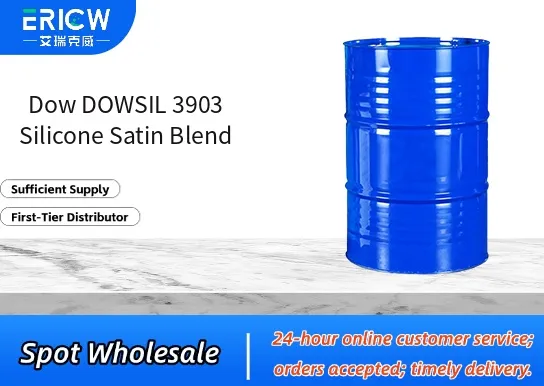
Delivers a soft, velvety satin finish with excellent tactile feel on coated substrates.
Offers outstanding compatibility with common solvent-based and UV-curable coating systems.
Provides superior thermal and oxidative stability for high-bake industrial processes.
Enhances surface slip and abrasion resistance without compromising substrate adhesion.
Low volatility and minimal extractables ensure compliance with stringent VOC and regulatory requirements.
Automotive interior trim coatings for dashboards, door panels, and center consoles.
High-end furniture and wood finishing systems requiring durable matte aesthetics.
Plastic parts in consumer electronics housings and appliance surfaces.
Industrial metal components requiring corrosion-resistant satin-finish topcoats.
Architectural metal cladding and decorative building façade coatings.
| Chemical Type | Modified silicone polymer blend |
| Product Form | Liquid concentrate (solvent-based) |
| Appearance | Clear to slightly hazy, low-viscosity liquid |
| Primary Applications | Satin-effect additive for protective and decorative coatings |
| Key Features | Surface energy modulation, mar resistance enhancement, compatibility with acrylic/polyester/epoxy resins |
| Benefits | Consistent gloss control (20–40 GU @ 60°), reduced fingerprint retention, improved processing stability |
| Recommended Use Level | 0.5–3.0 wt% in finished coating formulation |
| Storage Stability | 12 months at 5–30°C in unopened original container |
Q1: What is the primary function of DOWSIL 3903 Silicone Satin Blend in coatings and inks?
A: DOWSIL 3903 is a silicone-based additive designed to impart a soft, uniform satin finish while improving surface leveling, slip, and mar resistance. It functions as a surface modifier that migrates to the air-interface during film formation, creating a controlled, low-sheen appearance without significantly affecting substrate adhesion or gloss retention in adjacent areas.
Q2: Is DOWSIL 3903 compatible with waterborne and solventborne systems?
A: Yes — DOWSIL 3903 is formulated for broad compatibility across both waterborne acrylics, polyurethanes, and alkyds, as well as common solventborne resins including nitrocellulose, CAB, and polyester-based systems. It is typically added during let-down or post-addition stages and generally does not require high-shear dispersion.
Q3: How should DOWSIL 3903 be incorporated into a formulation to avoid surface defects?
A: To minimize defects such as craters or pinholes, add DOWSIL 3903 under moderate agitation after the main resin and pigment phases are stabilized. Avoid overdosing — it is typically used at low concentrations, and dosage depends on formulation requirements and desired sheen level. Pre-dilution in a compatible carrier solvent or resin solution may improve uniformity in sensitive systems.
Q4: Does DOWSIL 3903 affect recoatability or overprintability?
A: When used within recommended dosage ranges, DOWSIL 3903 generally supports good intercoat adhesion and overprintability. However, excessive levels may lead to weak boundary layers; therefore, compatibility and recoatability should be verified in the final system under intended drying and curing conditions.
Contact With Us:
E-mail: wangxingqiang@ericwchem.com
Have a Questions? Call Us:
Add:
Building A1, Jiete Industrial Park, Huangpu District, Guangzhou City, Guangdong Province, China