English
 Español
 tiếng việt
 русский
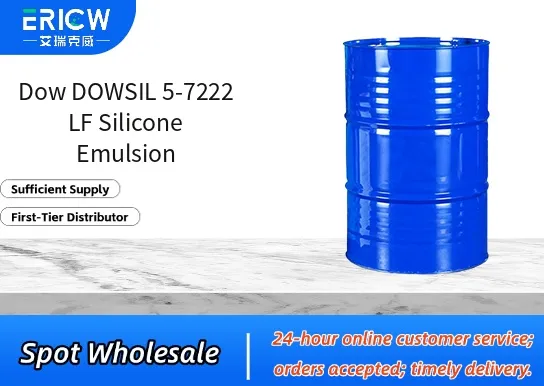
Low-foaming formulation designed for high-shear processing and continuous industrial operations.
Excellent compatibility with water-based systems, including acrylics, vinyl acetate copolymers, and cellulose derivatives.
Provides superior surface slip, mar resistance, and substrate wetting without compromising film integrity.
Non-ionic, APEO-free emulsion compliant with major global regulatory frameworks for sustainable manufacturing.
Stable across a broad pH range (pH 4–10) and tolerant to moderate electrolyte concentrations.
Architectural coatings for enhanced leveling and reduced roller spatter in interior and exterior paints.
Industrial maintenance coatings requiring improved substrate adhesion and gloss uniformity.
Wood coatings where low surface tension aids penetration and minimizes foam in spray and dip applications.
Textile finishing agents for soft handle, hydrophobicity, and anti-blocking performance.
Adhesives and sealants formulations seeking improved flow, deaeration, and interfacial compatibility.
| Chemical Type | Dimethyl silicone polymer emulsion |
| Product Form | Stable aqueous emulsion |
| Appearance | Opaque white to off-white liquid |
| Active Content | 22 ± 1 wt% |
| pH (10% aqueous dilution) | 6.0 – 7.5 |
| Viscosity (Brookfield, #2 spindle, 20 rpm, 25°C) | 100 – 300 mPa·s |
| Freeze-Thaw Stability | Passes 3 cycles (−5°C/24 h → 25°C/24 h) |
| Primary Applications | Coatings, inks, adhesives, textile finishes |
Q1: What is the primary function of DOWSIL 5-7222 LF in coating and ink formulations?
A: DOWSIL 5-7222 LF is a low-foaming, anionic silicone emulsion designed to provide surface leveling, substrate wetting, and slip enhancement in water-based coatings, inks, and graphic arts systems. It helps reduce surface defects such as craters, orange peel, and pinholes without significantly impacting foam stability or intercoat adhesion.
Q2: Is DOWSIL 5-7222 LF compatible with common water-based polymer systems?
A: Yes, it demonstrates good compatibility with acrylic, styrene-acrylic, vinyl acetate, and polyurethane dispersions, as well as many water-soluble resins. Compatibility should be verified under actual formulation conditions, especially when high electrolyte content or extreme pH values are present.
Q3: How should DOWSIL 5-7222 LF be incorporated into a formulation?
A: It is typically added during the let-down or post-addition stage, after high-shear dispersion of pigments and fillers. Gentle mixing is recommended to avoid excessive air entrapment. Pre-dilution with water or a portion of the formulation vehicle may improve uniformity of incorporation.
Q4: Does DOWSIL 5-7222 LF affect the drying or curing behavior of water-based systems?
A: It generally does not interfere with film formation, coalescence, or ambient-temperature drying kinetics. However, as with all additives, dosage and timing of addition should be optimized to ensure consistent performance across different resin types and application methods.
Contact With Us:
E-mail: wangxingqiang@ericwchem.com
Have a Questions? Call Us:
Add:
Building A1, Jiete Industrial Park, Huangpu District, Guangzhou City, Guangdong Province, China