English
 Español
 tiếng việt
 русский
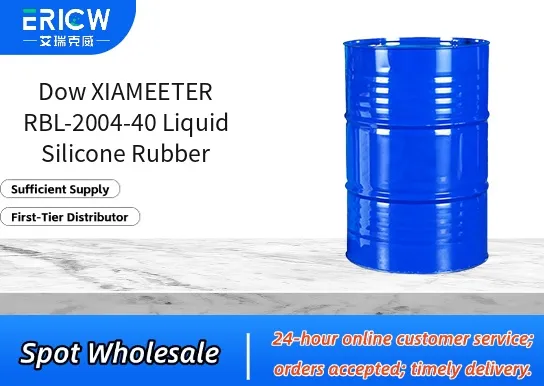
High biocompatibility, compliant with ISO 10993 and USP Class VI requirements for medical device applications.
Excellent thermal stability with continuous service temperature up to 200 °C.
Fast, consistent platinum-catalyzed cure at room temperature or elevated temperatures (e.g., 100–150 °C).
Low viscosity (40,000–50,000 cP at 25 °C) enabling excellent flow and mold-filling for intricate geometries.
Outstanding mechanical properties including high tear strength and elongation (>400%) after curing.
Implantable and short-term contact medical devices such as catheters, tubing, and seals.
Healthcare wearables including skin-contact sensors, patches, and ergonomic grips.
Pharmaceutical packaging components requiring extractables and leachables control.
Precision molded parts for diagnostic equipment and drug delivery systems.
| Chemical Type | Platinum-cured addition-cure liquid silicone rubber |
| Product Form | Two-part (Part A + Part B), ready-to-mix liquid system |
| Appearance | Clear to translucent viscous liquid (Part A); colorless to pale yellow liquid (Part B) |
| Primary Applications | Medical devices, healthcare wearables, pharmaceutical components |
| Key Features | Biocompatible, low extractables, high purity, excellent flow |
| Benefits | Reduced post-cure processing, consistent part quality, regulatory-ready formulation |
| Cure System | Platinum-based addition cure (inhibitor-controlled, heat-activated) |
| Shelf Life | 12 months unopened at ≤25 °C; protect from moisture and contamination |
Q1: What is the typical cure profile for RBL-2004-40?
A: RBL-2004-40 is a platinum-catalyzed LSR designed for fast, efficient curing at elevated temperatures. It typically achieves full crosslinking within minutes at mold temperatures ranging from 110 °C to 170 °C, with optimal processing observed in standard liquid injection molding (LIM) equipment.
Q2: Is RBL-2004-40 suitable for medical or food-contact applications?
A: RBL-2004-40 is formulated to meet general requirements for biocompatibility and extractables control. While it is not pre-certified for specific regulatory pathways, it is commonly selected for medical device components and food-grade elastomer parts where compatibility with ISO 10993 or FDA 21 CFR Part 177.2600 is targeted — subject to final validation by the end-user.
Q3: How does RBL-2004-40 perform in high-precision molding of thin-walled parts?
A: Thanks to its low viscosity and excellent flow characteristics, RBL-2004-40 supports reliable filling of intricate, micro-scale geometries and thin-walled sections. Its low shrinkage and dimensional stability after cure further enhance repeatability in tight-tolerance applications.
Q4: Can RBL-2004-40 be overmolded onto thermoplastics?
A: Yes — RBL-2004-40 demonstrates strong adhesion to many engineering thermoplastics such as PBT, PC, and PA when appropriate surface preparation and process conditions are applied. Adhesion performance should be verified experimentally for each substrate and production setup.
Contact With Us:
E-mail: wangxingqiang@ericwchem.com
Have a Questions? Call Us:
Add:
Building A1, Jiete Industrial Park, Huangpu District, Guangzhou City, Guangdong Province, China