English
 Español
 tiếng việt
 русский
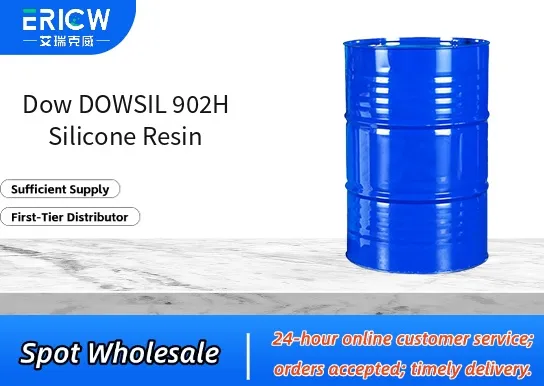
High thermal stability, maintaining integrity up to 200 °C continuous service temperature.
Excellent electrical insulation properties with low dielectric constant and dissipation factor.
Good adhesion to diverse substrates including metals, glass, and cured silicone elastomers.
Solvent-based formulation enabling easy integration into existing coating and impregnation processes.
Provides hydrophobic surface character and resistance to moisture ingress and environmental aging.
Electrical insulation coatings for transformers, reactors, and motor windings.
Protective varnishes for high-temperature wire enamels and magnet wires.
Matrix resin in high-performance composite laminates for aerospace and power electronics.
Surface treatment for enhancing weather resistance of silicone rubber components.
Binders in specialty refractory and ceramic fiber coatings.
| Chemical Type | Phenyl-methyl silicone resin |
| Product Form | Liquid (solvent solution) |
| Appearance | Clear, colorless to pale yellow liquid |
| Solvent System | Aromatic hydrocarbons (e.g., xylene) |
| Solids Content | 50–55 wt% (typical) |
| Viscosity (25 °C, Brookfield RV) | 800–1,200 cP |
| Density (25 °C) | 0.92–0.96 g/cm³ |
| Key Features | Thermally stable, electrically insulating, hydrophobic, substrate-adherent |
Q1: What is the primary function of DOWSIL 902H in coating formulations?
A: DOWSIL 902H is a methyl-phenyl silicone resin designed to enhance surface hardness, mar resistance, and thermal stability in high-performance coatings—particularly for metal, plastic, and composite substrates requiring durable, low-gloss finishes.
Q2: Is DOWSIL 902H compatible with common organic resin systems?
A: Yes—it exhibits good compatibility with acrylics, polyesters, alkyds, and epoxy resins when properly dispersed or dissolved in aromatic or ketonic solvents. Compatibility testing under actual formulation conditions is recommended due to variability in molecular weight and polarity of base resins.
Q3: How should DOWSIL 902H be incorporated into a coating system?
A: It is typically added during the let-down or grinding stage as a solution in xylene, toluene, or MEK. Good mechanical agitation ensures uniform dispersion. Pre-dilution to 25–50% solids is often used to facilitate handling and minimize viscosity spikes.
Q4: Does DOWSIL 902H require heat curing to develop its full performance benefits?
A: While it contributes measurable improvements at ambient temperature, optimal hardness, crosslink density, and chemical resistance are achieved through thermal cure—typically between 120°C and 180°C for 15–60 minutes, depending on film thickness and substrate.
Contact With Us:
E-mail: wangxingqiang@ericwchem.com
Have a Questions? Call Us:
Add:
Building A1, Jiete Industrial Park, Huangpu District, Guangzhou City, Guangdong Province, China