English
 Español
 tiếng việt
 русский
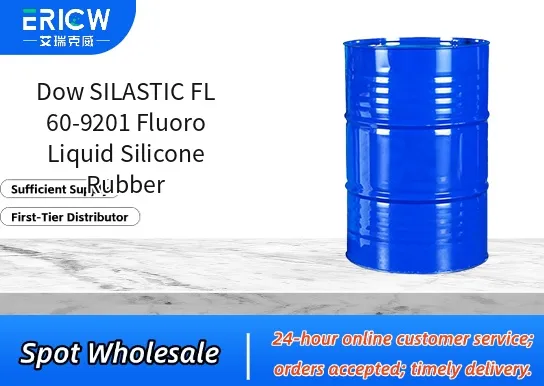
Exceptional resistance to aggressive fuels, oils, and aromatic hydrocarbons due to fluorosilicone chemistry.
High thermal stability with continuous service capability up to 200 °C in demanding environments.
Excellent low-temperature flexibility down to –45 °C, maintaining elastomeric performance across wide temperature ranges.
Two-part, platinum-cured liquid silicone rubber system enabling precise metering, fast cycle times, and consistent part replication.
Good electrical insulation properties and inherent flame retardancy without halogenated additives.
Aerospace fuel system seals and gaskets exposed to jet fuels (e.g., JP-8, Jet A) and synthetic lubricants.
Automotive under-hood components including turbocharger hoses, fuel injector seals, and EV battery module gasketing.
Industrial fluid handling systems requiring long-term compatibility with solvents, hydraulic fluids, and chemical process media.
Oil & gas downhole instrumentation seals subjected to sour gas (H₂S), crude oil, and high-pressure/high-temperature conditions.
Medical device components requiring biocompatibility support (ISO 10993 testing available) and resistance to sterilization fluids.
| Chemical Type | Fluoro-substituted liquid silicone rubber (LSR) |
| Product Form | Two-component (Part A + Part B), pourable liquid |
| Appearance (Uncured) | Translucent, low-viscosity liquid (Part A); translucent, viscous liquid (Part B) |
| Primary Applications | Static and dynamic sealing in fuel, oil, and chemical exposure environments |
| Key Features | Fluorosilicone backbone, platinum-cured, high purity, low extractables |
| Shore A Hardness (Cured) | 60 ± 3 |
| Cure System | Pt-catalyzed addition cure (inhibitor-controlled) |
| Processing Method | Liquid injection molding (LIM), compression molding, or dispensing |
Q1: What are the key performance advantages of Dow SILASTIC FL 60-9201 compared to standard liquid silicone rubbers?
A: Dow SILASTIC FL 60-9201 offers enhanced resistance to aggressive chemicals—including fuels, oils, and polar solvents—due to its fluoro-functional silicone backbone. It also provides improved thermal stability and lower compression set at elevated temperatures, making it suitable for demanding dynamic sealing and fluid-handling applications where conventional LSRs may degrade.
Q2: Is FL 60-9201 compatible with standard platinum-catalyzed LSR processing equipment and tooling?
A: Yes, FL 60-9201 is formulated for compatibility with conventional liquid injection molding (LIM) systems used for platinum-cured silicones. It exhibits similar rheology and cure kinetics to many standard LSRs, enabling seamless integration into existing production lines without major retooling—though optimal results require validation of mold temperature, injection parameters, and post-cure conditions for each specific application.
Q3: Can FL 60-9201 be overmolded onto thermoplastics or other elastomers?
A: Yes, FL 60-9201 is commonly used in two-shot molding processes over engineering thermoplastics such as PBT, PPS, and polyamide. Achieving strong interfacial adhesion typically requires careful surface preparation, optimized mold temperature control, and selection of compatible substrate grades—adhesion performance should be verified through application-specific testing.
Q4: Does this fluoro-LSR require special handling or storage conditions?
A: FL 60-9201 should be stored in sealed containers at temperatures between 15–25 °C, protected from moisture, direct sunlight, and platinum contamination sources (e.g., certain sulfur- or nitrogen-containing compounds). While not unusually sensitive, prolonged exposure to elevated temperatures or incompatible materials may affect shelf life or processing consistency.
Contact With Us:
E-mail: wangxingqiang@ericwchem.com
Have a Questions? Call Us:
Add:
Building A1, Jiete Industrial Park, Huangpu District, Guangzhou City, Guangdong Province, China