English
 Español
 tiếng việt
 русский
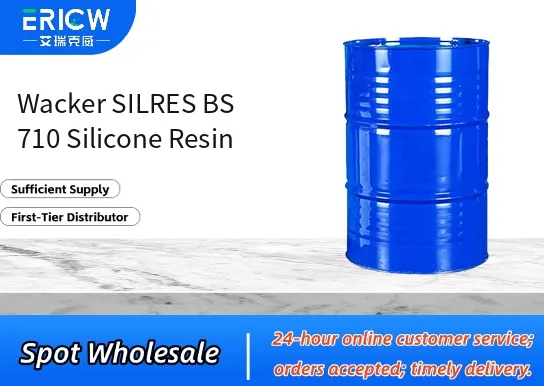
High thermal stability up to 250 °C continuous service temperature.
Excellent weather resistance and UV stability for long-term outdoor performance.
Good compatibility with organic resins, enabling hybrid formulation flexibility.
Low surface energy providing inherent water repellency and anti-soiling properties.
Solvent-based liquid format ensuring easy handling and integration into existing coating processes.
High-performance silicone-modified acrylic and polyester topcoats for architectural facades.
Heat-resistant coatings for industrial metal substrates including chimneys and exhaust systems.
Weatherable clear coats for aluminum composite panels (ACM) and metal cladding.
Water-repellent impregnation systems for mineral building materials such as concrete and natural stone.
Base resin in functional additives for fire-retardant and self-cleaning coating formulations.
| Chemical Type | Phenyl-methyl silicone resin |
| Product Form | Liquid, solvent-based solution |
| Appearance | Clear, colorless to pale yellow liquid |
| Solvent | Xylene / aromatic hydrocarbon mixture |
| Solids Content | Approx. 60 wt.% |
| Viscosity (25 °C) | Approx. 30–50 mPa·s (DIN 53019) |
| Density (20 °C) | Approx. 0.92–0.94 g/cm³ |
| Flash Point (PMCC) | Approx. 40 °C |
Q1: What is the primary function of SILRES BS 710 in coating formulations?
A: SILRES BS 710 acts as a hydrophobicity and durability enhancer in water-based architectural and industrial coatings. It improves water repellency, weather resistance, and substrate adhesion without compromising breathability or film flexibility.
Q2: Is SILRES BS 710 compatible with common waterborne acrylic and styrene-acrylic dispersions?
A: Yes, SILRES BS 710 is formulated for easy incorporation into standard waterborne polymer dispersions. It typically requires no pre-dilution and remains stable under normal formulation pH and shear conditions, though compatibility should be verified during full-scale batch testing.
Q3: How is SILRES BS 710 typically dosed in finished coatings?
A: Dosage depends on the desired performance level and base formulation, but it is generally used at low concentrations—typically ranging from 0.1% to 2% by weight relative to total formulation solids—to achieve effective surface modification and moisture resistance.
Q4: Does SILRES BS 710 require thermal curing to develop its full functionality?
A: No, SILRES BS 710 undergoes ambient coalescence and gradual crosslinking upon film formation. While elevated temperatures may accelerate network development, full hydrophobic performance is achieved under standard drying conditions typical for waterborne systems.
Contact With Us:
E-mail: wangxingqiang@ericwchem.com
Have a Questions? Call Us:
Add:
Building A1, Jiete Industrial Park, Huangpu District, Guangzhou City, Guangdong Province, China