English
 Español
 tiếng việt
 русский
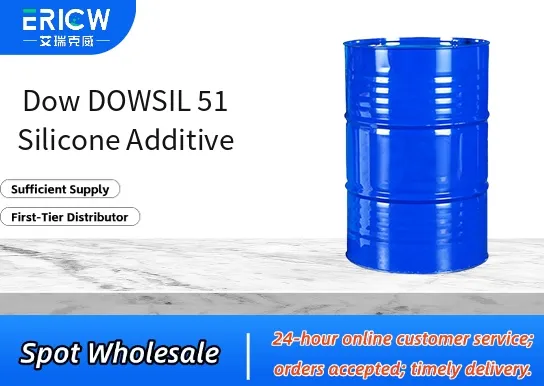
Enhances substrate wetting and leveling in solvent-based and high-solids coatings.
Reduces surface tension without compromising pot life or intercoat adhesion.
Provides excellent compatibility with acrylic, polyester, and epoxy resin systems.
Enables low foam generation during mixing and application.
Improves gloss uniformity and minimizes orange peel in cured films.
Automotive OEM and refinish coatings.
Industrial maintenance and coil coatings.
Wood finishes for furniture and flooring.
Plastic coatings and in-mold release formulations.
High-performance architectural coatings.
| Chemical Type | Modified polydimethylsiloxane |
| Product Form | Liquid |
| Appearance | Clear, colorless to pale yellow liquid |
| Primary Applications | Surface additive for protective and decorative coatings |
| Key Features | Wetting agent, leveling aid, foam control |
| Benefits | Improved flow, reduced defects, enhanced substrate coverage |
| Recommended Use Level | 0.05–0.3 wt% (based on total formulation) |
| Storage Conditions | Store in original sealed container at 5–30°C; protect from freezing and direct sunlight |
Q1: What is the primary function of DOWSIL 51 in coating and ink formulations?
A: DOWSIL 51 is a silicone-based additive designed to improve substrate wetting, reduce surface defects such as craters and orange peel, and enhance leveling and slip properties in solventborne and high-solids coatings, inks, and overprint varnishes.
Q2: Is DOWSIL 51 compatible with common resin systems used in industrial coatings?
A: Yes, DOWSIL 51 demonstrates broad compatibility with acrylics, polyesters, alkyds, epoxy esters, and urethane resins. It is generally stable in both oxidizing and non-oxidizing systems, though compatibility testing under specific formulation conditions is recommended.
Q3: How should DOWSIL 51 be incorporated into a formulation?
A: DOWSIL 51 is typically added during the let-down or post-addition stage, after pigment dispersion is complete. It should be introduced with gentle agitation to ensure uniform distribution and avoid excessive air entrapment. Pre-dilution in a compatible solvent may aid incorporation in viscous systems.
Q4: Does DOWSIL 51 affect recoatability or intercoat adhesion?
A: When used within typical dosage ranges, DOWSIL 51 does not significantly impair intercoat adhesion in properly formulated systems. However, overdosing may lead to surface migration and potential adhesion issues—therefore, dosage optimization and adhesion testing are advised for critical multilayer applications.
Q5: Can DOWSIL 51 be used in UV-curable systems?
A: DOWSIL 51 is not recommended for standard free-radical UV-curable formulations due to potential interference with photoinitiator activity and surface cure inhibition. For UV applications, Dow offers alternative silicone additives specifically engineered for compatibility and performance in those systems.
Contact With Us:
E-mail: wangxingqiang@ericwchem.com
Have a Questions? Call Us:
Add:
Building A1, Jiete Industrial Park, Huangpu District, Guangzhou City, Guangdong Province, China