English
 Español
 tiếng việt
 русский
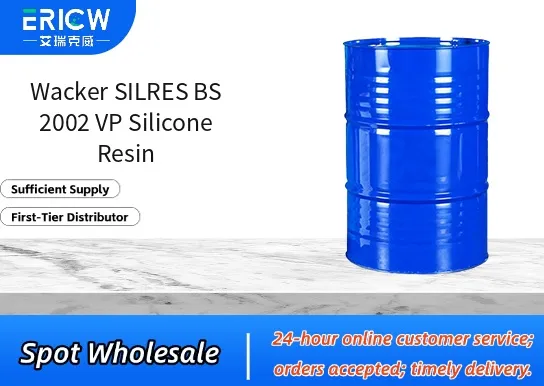
High thermal stability with continuous service up to 250 °C.
Excellent electrical insulation properties, even under humid conditions.
Good compatibility with organic resins and pigments for hybrid formulation systems.
Low surface energy enabling superior water repellency and anti-graffiti performance.
Solvent-based liquid form for easy integration into coating and impregnation processes.
Heat-resistant coatings for industrial exhaust systems and engine components.
Water-repellent impregnation agents for concrete, natural stone, and masonry.
Functional binders in high-performance ceramic and refractory coatings.
Surface modifiers in architectural facade paints for enhanced durability and soiling resistance.
Base resin in flame-retardant and low-smoke cable jacketing compounds.
| Chemical Type | Phenyl-methyl silicone resin |
| Product Form | Liquid, solvent-based (xylene/toluene blend) |
| Appearance | Clear, colorless to pale yellow liquid |
| Non-Volatile Content | 50 ± 2 wt.% |
| Viscosity (25 °C) | 15–25 mPa·s (DIN 53019) |
| Density (20 °C) | 0.92–0.96 g/cm³ |
| Flash Point (PMCC) | Approx. 30 °C |
| Primary Applications | Protective coatings, impregnation agents, hybrid binder systems |
Q1: What is the primary function of SILRES BS 2002 VP in coating formulations?
A: SILRES BS 2002 VP is a vinyl-functional silicone resin designed to enhance surface properties—particularly water repellency, mar resistance, and substrate adhesion—in solvent-based and high-solids architectural and industrial coatings. It functions as a reactive modifier that co-cures with organic binders, contributing durable silicone character without compromising film integrity.
Q2: Is SILRES BS 2002 VP compatible with common acrylic or alkyd resins?
A: Yes, it demonstrates good compatibility with a broad range of organic polymer systems—including acrylics, alkyds, polyurethanes, and melamine-formaldehyde resins—especially in solvent-borne formulations. Compatibility should be verified experimentally under specific formulation conditions, as performance depends on solvent polarity, mixing sequence, and cure profile.
Q3: How is SILRES BS 2002 VP typically incorporated into a coating system?
A: It is generally added during the let-down stage, after pigment grinding, and mixed under moderate shear. Pre-dilution in a compatible solvent (e.g., xylene, Solvesso™ 100, or butyl acetate) is recommended to ensure uniform dispersion. Dosage depends on formulation requirements but typically ranges from 0.1% to 2% by weight relative to total formulation solids.
Q4: Does SILRES BS 2002 VP require special curing conditions?
A: It participates in thermal crosslinking via its vinyl groups, often in combination with organic crosslinkers (e.g., melamines or blocked isocyanates). Optimal performance is achieved at standard baking temperatures (120–180 °C), though full reactivity may require catalysts such as platinum-based systems in select high-performance applications.
Contact With Us:
E-mail: wangxingqiang@ericwchem.com
Have a Questions? Call Us:
Add:
Building A1, Jiete Industrial Park, Huangpu District, Guangzhou City, Guangdong Province, China