English
 Español
 tiếng việt
 русский
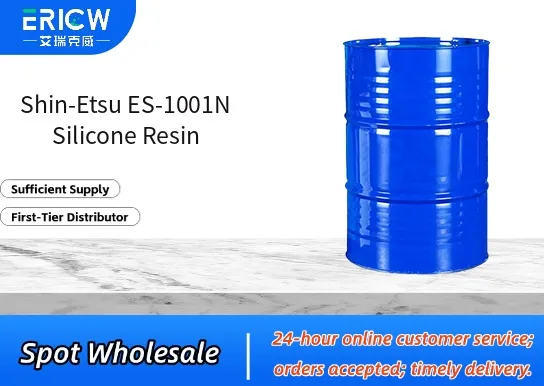
High thermal stability with continuous service temperature up to 200 °C.
Excellent electrical insulation properties, even under humid or high-voltage conditions.
Good compatibility with organic resins and fillers for hybrid formulation development.
Low volatility and minimal outgassing, suitable for vacuum and aerospace-critical environments.
Self-crosslinking capability at elevated temperatures without added catalysts.
High-performance insulating varnishes for motor and transformer windings.
Thermal management coatings for power electronics and EV battery components.
Matrix resin in composite laminates for aerospace and rail transportation interiors.
Binders for heat-resistant ceramic fiber mats and refractory insulation materials.
Base resin for flame-retardant, low-smoke cable jacketing compounds.
| Chemical Type | Methyl-phenyl silicone resin |
| Product Form | Clear to light yellow viscous liquid |
| Appearance | Homogeneous, transparent to slightly hazy liquid |
| Primary Applications | Electrical insulation, thermal protection, high-temp coatings |
| Key Features | Thermally curable, solvent-soluble (e.g., xylene, toluene), non-ionic |
| Benefits | Enhanced dielectric strength, reduced carbon residue on pyrolysis, excellent adhesion to metals and ceramics |
| Storage Condition | Store in sealed containers at 5–30 °C; protect from moisture and direct sunlight |
Q1: What is the primary function of ES-1001N in coating and ink formulations?
A: ES-1001N is a methyl-phenyl silicone resin designed to enhance surface slip, improve scratch resistance, and reduce surface tension in solvent-based and high-solids coatings, overprint varnishes, and gravure/flexographic inks.
Q2: Is ES-1001N compatible with common organic resins and polymers?
A: Yes — ES-1001N exhibits good compatibility with acrylics, polyesters, alkyds, nitrocellulose, and many thermoplastic and thermosetting resin systems, especially when properly dispersed or pre-diluted in suitable solvents.
Q3: How should ES-1001N be incorporated into a formulation?
A: It is typically added during the let-down or post-addition stage, after main binder dispersion. Pre-dilution in aromatic or ketonic solvents (e.g., xylene, MEK) is recommended for uniform distribution and optimal performance.
Q4: Does ES-1001N require heat curing to develop its full functionality?
A: No — ES-1001N imparts surface-modifying effects at ambient conditions; however, thermal treatment (e.g., 120–150 °C) may further promote crosslinking and enhance durability in thermally cured systems.
Contact With Us:
E-mail: wangxingqiang@ericwchem.com
Have a Questions? Call Us:
Add:
Building A1, Jiete Industrial Park, Huangpu District, Guangzhou City, Guangdong Province, China