English
 Español
 tiếng việt
 русский
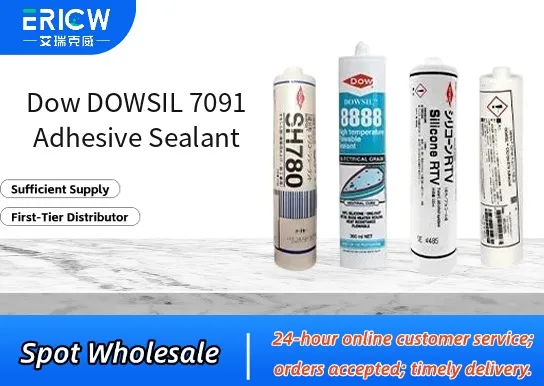
High-performance, one-component, moisture-curing silicone adhesive sealant with excellent adhesion to glass, aluminum, stainless steel, and many plastics.
Offers superior resistance to thermal cycling, UV exposure, and weathering without cracking or embrittlement.
Low modulus formulation provides high flexibility and stress relief for bonded assemblies subject to vibration or expansion/contraction.
Non-corrosive to sensitive metals and compatible with most electronic components and optical coatings.
Meets stringent outgassing requirements per ASTM E595 for aerospace and vacuum applications.
Optical bonding of display covers, touch panels, and sensor windows in consumer electronics and medical devices.
Sealing and bonding of LED lighting housings, including high-brightness streetlights and automotive headlamp modules.
Structural assembly of solar photovoltaic modules — encapsulating junction boxes and sealing frame-to-glass interfaces.
Adhesive gasketing for cleanroom HVAC ductwork and semiconductor process equipment enclosures.
Bonding of architectural glazing systems requiring long-term durability and aesthetic clarity.
| Chemical Type | Acetoxy-cure silicone polymer |
| Product Form | Paste, thixotropic, non-sag |
| Appearance | Translucent off-white to light amber |
| Cure Mechanism | Moisture-curing at room temperature |
| Shore A Hardness (7 days, 23°C/50% RH) | 25–30 |
| Tensile Strength (ASTM C1135) | 1.8–2.2 MPa |
| Elongation at Break (ASTM C1135) | 250–320% |
| Regulatory Compliance | RoHS 2015/863 compliant; REACH SVHC-free; FDA 21 CFR 175.300 compliant for indirect food contact |
| Common Compatible Systems | Suitability |
| Glass substrates (soda-lime, borosilicate, tempered) | Highly Recommended – Forms strong, durable bonds without primers |
| Anodized aluminum and stainless steel (304/316) | Highly Recommended – Excellent adhesion and corrosion resistance |
| Polycarbonate (PC) and acrylic (PMMA) lenses | Recommended – Requires surface cleaning; no stress cracking observed |
| EPDM and silicone rubber gaskets | Suitable – Good interface compatibility; no adverse swelling or migration |
Q1: What is the CAS Registry Number for DOWSIL 7091?
A: The CAS number for DOWSIL 7091 Adhesive Sealant is 68953-58-2 (for the base polymer system); full formulation details are proprietary and available under NDA upon request.
Q2: What is the typical application thickness and recommended cure time before handling?
A: Recommended bond line thickness is 0.2–2.0 mm; initial tack develops within 15–30 minutes, while full physical properties develop after 7 days at 23°C/50% RH. Handling strength is typically achieved after 24 hours.
Q3: How does DOWSIL 7091 compare to DOWSIL 995 or DOWSIL 3-2051 in terms of modulus and service temperature?
A: DOWSIL 7091 is a low-modulus, flexible adhesive (Shore A ~27), optimized for stress-sensitive optics and thermal cycling; DOWSIL 995 is a high-strength, medium-modulus structural sealant (Shore A ~35), while DOWSIL 3-2051 is an ultra-low-outgassing, high-purity variant for UHV applications with tighter hardness control.
Q4: Does DOWSIL 7091 exhibit extractables or leachables that could affect adjacent optical or electronic components?
A: Per internal testing per IEC 61215 and MIL-STD-883 Method 5011, DOWSIL 7091 shows negligible volatile siloxane migration (< 0.1% wt loss at 125°C/24h) and no detectable ionic contaminants (Na⁺, Cl⁻, K⁺ < 5 ppm) when fully cured.
Contact With Us:
E-mail: wangxingqiang@ericwchem.com
Have a Questions? Call Us:
Add:
Building A1, Jiete Industrial Park, Huangpu District, Guangzhou City, Guangdong Province, China