English
 Español
 tiếng việt
 русский
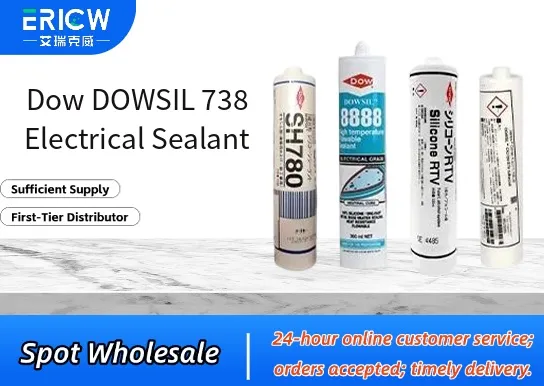
Fast-curing, one-component silicone sealant with excellent electrical insulation properties.
Offers superior resistance to moisture, ozone, and thermal cycling (-55 °C to +200 °C continuous).
Low modulus formulation provides stress relief for sensitive electronic components and substrates.
Non-corrosive, acetoxy-cure chemistry ensures compatibility with copper, aluminum, and most PCB laminates.
Meets UL 94 V-0 flammability rating for enhanced safety in enclosed electrical enclosures.
Sealing and potting of power supplies, transformers, and inverters in renewable energy systems.
Insulating and protecting high-voltage connectors and busbar assemblies in EV charging infrastructure.
Moisture barrier for outdoor-rated LED drivers and lighting control modules.
Encapsulation of sensors and control units in industrial automation and smart grid equipment.
Gap-filling and vibration damping in railway signaling and traction electronics.
| Chemical Type | Acetoxy-cure silicone elastomer |
| Product Form | Paste, thixotropic, ready-to-use |
| Appearance | Opaque white or translucent gel (color may vary by batch) |
| Cure Mechanism | Moisture-cured at room temperature |
| Tensile Strength (ASTM D412) | ≈ 2.5 MPa (after 7-day cure at 23 °C / 50% RH) |
| Dielectric Strength (ASTM D149) | ≥ 20 kV/mm |
| Volume Resistivity (ASTM D257) | > 1 × 10¹⁵ Ω·cm |
| Regulatory Compliance | RoHS 2015/863/EU compliant; REACH SVHC-free; UL Recognized (E49414) |
| Common Compatible Systems | Suitability |
| FR-4 PCB substrates | Highly Recommended – No adverse interaction; excellent adhesion without priming |
| Aluminum and anodized aluminum housings | Highly Recommended – Strong bond strength and long-term stability |
| Copper busbars and terminals | Recommended – Non-corrosive; validated per IEC 60068-2-60 (acetic acid exposure test) |
| Polyamide (PA66) and PBT enclosures | Suitable – Good adhesion with minor surface preparation; no plasticizer migration observed |
Q1: What is the CAS Registry Number for DOWSIL 738 Electrical Sealant?
A: DOWSIL 738 is a proprietary formulated product; individual CAS numbers are assigned only to specific chemical constituents (e.g., siloxane polymers, crosslinkers). Full composition details are provided under NDA upon request via Dow’s Technical Service team.
Q2: What is the recommended application thickness and coverage rate?
A: Optimal performance is achieved at 1–3 mm cured thickness. Typical coverage is ~120–150 cm² per gram at 1 mm thickness; exact usage depends on joint geometry, substrate porosity, and environmental conditions.
Q3: How does DOWSIL 738 compare to DOWSIL 3-6552 in high-voltage applications?
A: DOWSIL 738 offers faster surface cure and lower modulus for stress-sensitive components, while DOWSIL 3-6552 provides higher thermal conductivity and is optimized for heat dissipation. Both meet UL 94 V-0 and offer comparable dielectric strength; selection depends on mechanical vs. thermal management priority.
Q4: Is DOWSIL 738 suitable for potting in medical device electronics subject to ISO 10993?
A: DOWSIL 738 is not ISO 10993 certified. It is designed for industrial and energy infrastructure use. For medical applications, Dow recommends DOWSIL™ Q2-7425 or other biocompatibility-validated formulations — contact Dow Medical Polymers for qualified alternatives.
Q5: Does DOWSIL 738 exhibit extractables or leachables that could affect downstream semiconductor processes?
A: DOWSIL 738 is not intended for semiconductor fab environments. While it emits minimal volatile byproducts (primarily acetic acid during cure), residual volatiles and potential ionic contaminants make it unsuitable for cleanroom-critical applications. Use only in non-cleanroom, final-assembly contexts.
Contact With Us:
E-mail: wangxingqiang@ericwchem.com
Have a Questions? Call Us:
Add:
Building A1, Jiete Industrial Park, Huangpu District, Guangzhou City, Guangdong Province, China