English
 Español
 tiếng việt
 русский
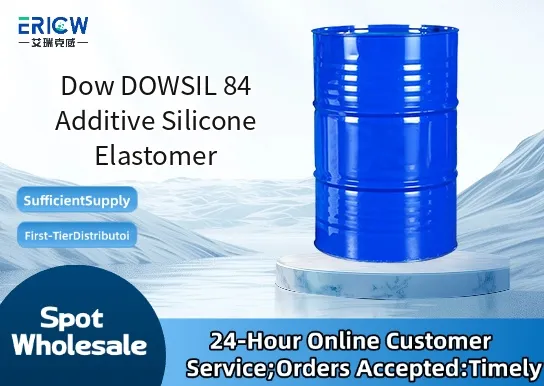
Enhances soft-touch feel and tactile performance in thermoplastic elastomer (TPE) and polyolefin compounds.
Improves melt processability and dispersion stability during compounding and injection molding.
Delivers excellent compatibility with common polymers including PP, PE, SEBS, and TPE-S.
Reduces surface friction without compromising mechanical strength or long-term aging resistance.
Non-migrating formulation ensures consistent surface properties and avoids blooming or staining.
Soft-grip overmolding for power tools, hand-held electronics, and medical device housings.
Tactile enhancement in automotive interior trim, dashboards, and control knobs.
Surface modification of consumer appliance components requiring ergonomic handling.
Functional additive in medical-grade TPE formulations for wearable devices and patient interfaces.
Performance modifier for high-clarity, soft-touch packaging films and closures.
| Chemical Type | Organomodified silicone elastomer dispersion |
| Product Form | Pellets |
| Appearance | Off-white to light tan, free-flowing pellets |
| Primary Applications | Soft-touch additive for thermoplastics and elastomers |
| Key Features | Non-migrating, thermally stable, polymer-compatible |
| Recommended Loading Range | 1–5 wt% depending on substrate and performance target |
| Storage Conditions | Store in original sealed container at 15–30 °C; protect from moisture |
| Processing Temperature Range | 160–240 °C (compatible with standard TPE/PP/PE processing) |
Q1: What is the primary function of DOWSIL 84 in coating and ink formulations?
A: DOWSIL 84 is a silicone elastomer additive designed to enhance surface slip, improve mar resistance, and reduce coefficient of friction in solvent-based, water-based, and UV-curable coatings and inks. It functions by migrating to the film surface during drying or curing, forming a soft, elastic, low-energy layer.
Q2: Is DOWSIL 84 compatible with common resin systems such as acrylics, polyurethanes, and alkyds?
A: Yes, DOWSIL 84 demonstrates broad compatibility with a wide range of binder systems, including acrylics, polyurethanes, alkyds, and epoxy-modified resins. Compatibility should be verified in the final formulation due to potential interactions with catalysts, surfactants, or other additives.
Q3: How does DOWSIL 84 affect film clarity and gloss in transparent coatings?
A: When used at recommended levels, DOWSIL 84 maintains excellent optical clarity and has minimal impact on gloss. It is not known to cause haze or bloom under typical processing and application conditions, making it suitable for high-gloss decorative and protective clearcoats.
Q4: Can DOWSIL 84 be used in food-contact compliant coatings?
A: DOWSIL 84 is not pre-approved for direct food-contact applications. Formulators intending to use it in food-contact coatings must conduct full regulatory evaluation—including extraction testing and compliance verification—based on applicable regional requirements and end-use conditions.
Q5: What is the typical dosage range for optimal performance?
A: DOWSIL 84 is typically used at low concentrations, generally ranging from 0.1% to 2% by weight relative to total formulation solids. Optimal dosage depends on the specific resin system, desired performance balance, and application method—initial trials are recommended to fine-tune loading.
Contact With Us:
E-mail: wangxingqiang@ericwchem.com
Have a Questions? Call Us:
Add:
Building A1, Jiete Industrial Park, Huangpu District, Guangzhou City, Guangdong Province, China