English
 Español
 tiếng việt
 русский
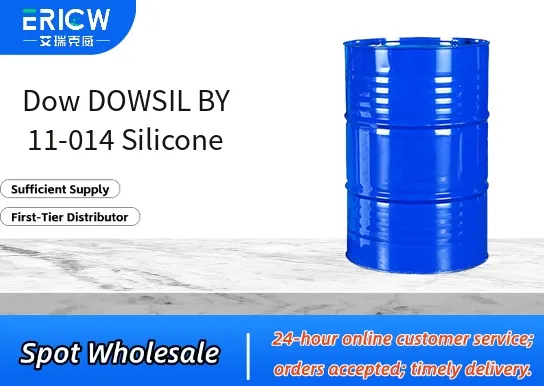
High-performance, addition-cure liquid silicone rubber (LSR) with excellent thermal stability.
Low compression set and superior long-term elasticity for demanding sealing applications.
Excellent electrical insulation properties across wide temperature and frequency ranges.
Good flow characteristics and low viscosity for precise mold filling and complex part replication.
Meets UL 94 V-0 flammability rating for enhanced safety in electronic and automotive components.
Automotive sensor encapsulation and protective grommets.
Electrical connectors and high-voltage insulators in energy systems.
Medical device seals requiring biocompatibility support (ISO 10993 tested).
LED lighting housings and optical lens bonding layers.
Industrial control module potting and environmental protection barriers.
| Chemical Type | Platinum-catalyzed addition-cure silicone elastomer |
| Product Form | Two-part liquid system (Part A + Part B) |
| Appearance | Translucent to milky white viscous liquid |
| Primary Applications | Encapsulation, sealing, gasketing, and potting |
| Key Features | Thermal stability, low compression set, electrical insulation |
| Benefits | Dimensional stability, long service life, process reliability |
| Curing Method | Heat-cured (typical: 150°C for 5–10 minutes) |
| Shelf Life | 12 months at 25°C in unopened original packaging |
Q1: What is the primary function of DOWSIL BY 11-014 Silicone in industrial formulations?
A: DOWSIL BY 11-014 Silicone is a silicone-based additive primarily used to improve surface leveling, reduce surface defects such as craters and orange peel, and enhance substrate wetting in coatings, inks, and adhesive systems.
Q2: Is DOWSIL BY 11-014 Silicone compatible with waterborne and solventborne systems?
A: Yes, it is designed for broad compatibility across both waterborne and solventborne formulations, including acrylics, polyurethanes, and alkyds. Compatibility should always be verified through small-scale testing under actual process conditions.
Q3: How should DOWSIL BY 11-014 Silicone be incorporated into a formulation?
A: It is typically added during the let-down or post-addition stage, after pigments and primary resins are dispersed. Gentle mixing is recommended to avoid excessive air entrapment, and dosage generally ranges from 0.1% to 2% by weight of the total formulation, depending on desired performance and system sensitivity.
Q4: Does DOWSIL BY 11-014 Silicone affect film formation or cure behavior?
A: At recommended use levels, it does not significantly interfere with film formation or thermal/UV cure mechanisms. However, high dosages may influence intercoat adhesion or surface energy, so optimization trials are advised for critical applications.
Contact With Us:
E-mail: wangxingqiang@ericwchem.com
Have a Questions? Call Us:
Add:
Building A1, Jiete Industrial Park, Huangpu District, Guangzhou City, Guangdong Province, China