English
 Español
 tiếng việt
 русский
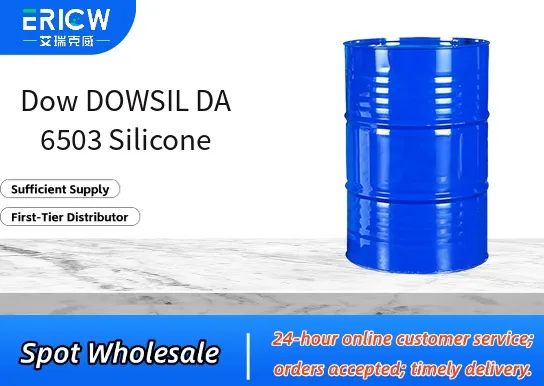
High-performance, addition-cure liquid silicone rubber (LSR) with excellent thermal stability.
Low viscosity for easy processing and precise mold filling, ideal for intricate part geometries.
Excellent mechanical properties including high tear strength and elongation after cure.
Biocompatibility compliant with ISO 10993-5 and USP Class VI for medical device applications.
Consistent batch-to-batch reproducibility and low extractables for regulated industries.
Medical devices such as catheters, respiratory components, and drug delivery system parts.
Automotive sensors and sealing components requiring long-term reliability under thermal cycling.
Consumer health products including wearable patches and skin-contact interfaces.
Electronics encapsulation and protective gasketing in portable diagnostic equipment.
Pharmaceutical manufacturing components like pump diaphragms and fluid-handling manifolds.
| Chemical Type | Addition-cure liquid silicone rubber (LSR) |
| Product Form | Two-part system (Part A: base; Part B: platinum catalyst) |
| Appearance | Pale yellow to colorless viscous liquid (Part A); colorless liquid (Part B) |
| Primary Applications | Medical device molding, precision automotive seals, biocompatible elastomer components |
| Key Features | Low compression set, high biostability, FDA-compliant raw materials |
| Benefits | Reduced post-cure requirements, extended service life in humid/sterile environments |
| Curing Mechanism | Platinum-catalyzed hydrosilylation at elevated temperature (e.g., 110–150°C) |
| Shelf Life | 12 months unopened at ≤25°C (Parts A and B stored separately) |
Q1: What is the primary function of DOWSIL DA 6503 Silicone in coating and ink formulations?
A: DOWSIL DA 6503 Silicone functions primarily as a surface additive to improve substrate wetting, reduce surface defects such as craters and orange peel, and enhance leveling and gloss uniformity in solvent-based and radiation-curable systems.
Q2: Is DOWSIL DA 6503 Silicone compatible with high-solids or low-VOC formulations?
A: Yes, it demonstrates good compatibility in high-solids, low-VOC, and water-reducible systems due to its low surface tension and controlled migration behavior—though optimal performance should be verified through formulation-specific testing.
Q3: How does DOWSIL DA 6503 Silicone differ from conventional silicone surfactants in terms of foam control?
A: Unlike many reactive or high-foaming silicones, DOWSIL DA 6503 offers balanced surface activity with minimal foam generation and no significant defoaming interference—making it suitable for applications where foam stability must be preserved during processing.
Q4: Can DOWSIL DA 6503 Silicone be used in UV-curable coatings without affecting cure speed or final film properties?
A: It is formulated to be compatible with common photoinitiator systems and typically does not inhibit UV cure kinetics when used at recommended dosage levels; however, slight adjustments to photoinitiator concentration or energy dose may be needed depending on overall formulation complexity.
Contact With Us:
E-mail: wangxingqiang@ericwchem.com
Have a Questions? Call Us:
Add:
Building A1, Jiete Industrial Park, Huangpu District, Guangzhou City, Guangdong Province, China