English
 Español
 tiếng việt
 русский
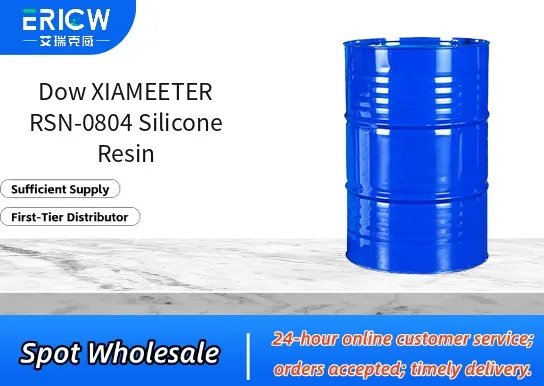
High thermal stability with continuous service up to 200 °C.
Excellent electrical insulation properties across wide temperature and frequency ranges.
Good compatibility with organic resins and pigments for hybrid formulation flexibility.
Low surface energy enabling superior release performance and hydrophobicity.
Solvent-soluble in common aromatic and ketonic solvents for easy processing.
High-temperature coatings for industrial exhaust systems and baking ovens.
Electrical insulating varnishes for motors, transformers, and coil winding.
Release coatings for silicone paper, PET film, and composite mold surfaces.
Hybrid binder in heat-resistant paints and ceramic matrix composites.
Surface modifier for enhancing weatherability and water repellency in architectural sealants.
| Chemical Type | Methyl-phenyl silicone resin |
| Product Form | Clear to slightly hazy liquid |
| Appearance | Colorless to pale yellow viscous liquid |
| Solvent System | Toluene / xylene blend |
| Solids Content | 60 ± 2 wt% |
| Viscosity (25 °C, mPa·s) | 1,200–2,500 |
| Specific Gravity (25 °C) | 0.98–1.02 |
| Flash Point (COC) | 45–50 °C |
Q1: What is the primary function of Dow XIAMEETER RSN-0804 in coating formulations?
A: Dow XIAMEETER RSN-0804 is a methyl-phenyl silicone resin designed to enhance thermal stability, weather resistance, and surface hardness in high-performance coatings—particularly for industrial and architectural applications exposed to elevated temperatures or UV stress.
Q2: Is RSN-0804 compatible with organic resin systems such as acrylics or polyesters?
A: Yes, RSN-0804 demonstrates good compatibility with many thermosetting organic resins—including acrylics, alkyds, and polyester-based systems—when properly dispersed and cured. Compatibility testing under intended processing conditions is recommended to confirm formulation stability and film performance.
Q3: How is RSN-0804 typically incorporated into a coating formulation?
A: It is generally added during the let-down or post-addition stage, dissolved or dispersed in suitable aromatic or high-boiling ketone solvents. Mixing should be conducted under controlled shear and temperature to ensure uniform distribution without premature condensation.
Q4: Does RSN-0804 require a catalyst to achieve full cure in thermoset systems?
A: While RSN-0804 can undergo thermal self-condensation at elevated temperatures, optimal crosslink density and performance are typically achieved when used with conventional acid catalysts (e.g., p-toluenesulfonic acid) or metal-organic catalysts, depending on the base resin and cure schedule.
Q5: Can RSN-0804 be used in low-VOC or solvent-reduced formulations?
A: Yes—RSN-0804 is available in solvent-based grades suitable for VOC-compliant formulations, and it can be adapted into higher-solids or reactive diluent-modified systems. Formulators may adjust solvent selection and solids content to meet regional VOC targets without compromising key functional benefits.
Contact With Us:
E-mail: wangxingqiang@ericwchem.com
Have a Questions? Call Us:
Add:
Building A1, Jiete Industrial Park, Huangpu District, Guangzhou City, Guangdong Province, China