English
 Español
 tiếng việt
 русский
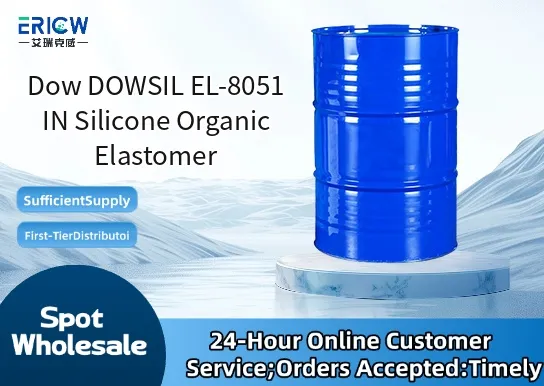
Highly flexible silicone-organic hybrid elastomer offering exceptional elongation and recovery.
Excellent compatibility with diverse polymer matrices including polyolefins, styrenics, and thermoplastic elastomers.
Enables low-viscosity processing without sacrificing mechanical integrity or thermal stability.
Provides outstanding hydrophobicity and surface water repellency in finished compounds.
Free of halogens and heavy metals, supporting compliance with RoHS and REACH requirements.
Soft-touch overmolding for automotive interior trim and controls.
Flexible, skin-friendly components in wearable health monitoring devices.
Sealants and gasketing materials requiring long-term compression set resistance.
Enhanced grip and tactile performance in consumer electronics housings and accessories.
Functional additives for improving flexibility and weatherability in architectural sealant formulations.
| Chemical Type | Silicone-organic hybrid elastomer (polydimethylsiloxane–acrylate copolymer) |
| Product Form | Clear to slightly hazy viscous liquid |
| Appearance | Colorless to pale yellow, homogeneous liquid |
| Primary Applications | Tactile enhancement, soft-touch modification, flexible sealing, and polymer toughening |
| Key Features | Low glass transition temperature (Tg ≈ −45 °C), high chain mobility, non-crosslinking |
| Benefits | Improved processability, reduced compound hardness, enhanced elasticity at low temperatures |
| Storage Conditions | Store in original sealed container at 5–30 °C; protect from moisture and direct sunlight |
| Regulatory Status | Compliant with FDA 21 CFR §177.2600 (for indirect food contact); REACH registered |
Q1: What is the primary function of DOWSIL EL-8051 IN in formulations?
A: DOWSIL EL-8051 IN functions as a silicone-based organic elastomer modifier, primarily used to enhance elasticity, soft-touch feel, and surface resilience in silicone and hybrid polymer systems—especially in personal care emulsions, coatings, and specialty gels.
Q2: Is DOWSIL EL-8051 IN compatible with water-based systems?
A: Yes, it is formulated for compatibility with both anhydrous and aqueous systems, including oil-in-water emulsions. Stable incorporation typically requires appropriate high-shear mixing or pre-dilution in a co-solvent or carrier oil, depending on the base formulation.
Q3: How does DOWSIL EL-8051 IN differ from conventional silicone fluids or gums?
A: Unlike linear silicone fluids or high-viscosity gums, EL-8051 IN is a pre-crosslinked, organically modified silicone elastomer—offering built-in elasticity and film-forming capability without requiring additional curing agents or heat activation in most applications.
Q4: Can DOWSIL EL-8051 IN be used in rinse-off versus leave-on personal care products?
A: It is suitable for both rinse-off and leave-on formats, delivering sensory benefits such as smoothness and suppleness. Performance retention in rinse-off systems may depend on formulation pH, ionic strength, and surfactant selection.
Q5: What processing considerations are recommended when incorporating DOWSIL EL-8051 IN?
A: For optimal dispersion, incorporate EL-8051 IN during the oil phase at temperatures above its softening point (typically >30 °C), followed by controlled shear mixing. Avoid prolonged high-shear exposure post-dispersion to preserve elastomeric network integrity.
Contact With Us:
E-mail: wangxingqiang@ericwchem.com
Have a Questions? Call Us:
Add:
Building A1, Jiete Industrial Park, Huangpu District, Guangzhou City, Guangdong Province, China