English
 Español
 tiếng việt
 русский
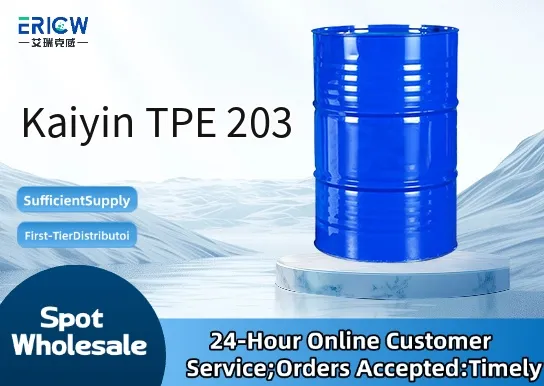
Excellent elasticity and soft-touch feel with Shore A hardness of 35–45.
Good processability via injection molding and extrusion without pre-drying.
Enhanced thermal stability for consistent performance up to 120 °C short-term.
Low extractables and compliant with FDA 21 CFR 177.2600 for food-contact applications.
Recyclable thermoplastic structure enabling material reuse in closed-loop production.
Soft-grip overmolding for power tools and hand-held appliances.
Seals and gaskets in automotive interior components.
Food-grade squeeze bottles and dispensing caps.
Medical device grips and non-invasive wearable housings.
Eco-conscious consumer packaging closures and flexible containers.
| Chemical Type | Thermoplastic Elastomer (SEBS-based) |
| Product Form | Pellets |
| Appearance | Translucent, natural color pellets |
| Shore A Hardness | 38 ± 3 |
| Melt Flow Rate (200 °C/5 kg) | 12–16 g/10 min |
| Density | 0.91–0.93 g/cm³ |
| Key Features | Soft-touch, low compression set, good UV resistance |
| Benefits | Reduced cycle time, no vulcanization required, recyclable |
Q1: What is the primary function of Kaiyin TPE 203 in thermoplastic elastomer formulations?
A: Kaiyin TPE 203 is a high-performance processing aid and compatibilizer designed to enhance melt flow, improve dispersion of fillers and additives, and reduce extrusion torque in TPE systems—particularly in SEBS- and TPO-based compounds.
Q2: Is Kaiyin TPE 203 compatible with common polymer matrices such as PP, PE, and SEBS?
A: Yes—it exhibits broad compatibility with polyolefins (PP, HDPE, LDPE), styrenic thermoplastic elastomers (SEBS, SBS), and many engineering thermoplastics. Its molecular architecture supports interfacial adhesion without compromising base polymer mechanical properties.
Q3: How should Kaiyin TPE 203 be incorporated into a compound during processing?
A: It is typically added directly to the base polymer during compounding—either via side-feeding or masterbatch dilution. For optimal dispersion, it is recommended to introduce it after the polymer has fully melted and before filler addition, under moderate shear conditions.
Q4: Does Kaiyin TPE 203 affect the final product’s surface appearance or adhesion properties?
A: When used within recommended dosage ranges, it generally improves surface gloss and uniformity while maintaining or slightly enhancing substrate adhesion—especially in overmolding applications involving PP, ABS, or PC substrates.
Q5: Can Kaiyin TPE 203 be used in food-contact or medical-grade TPE formulations?
A: Kaiyin TPE 203 is not pre-certified for direct food-contact or medical applications. Customers intending such use must conduct full regulatory evaluation—including extractables testing and compliance verification against applicable regional requirements—prior to commercial deployment.
Contact With Us:
E-mail: wangxingqiang@ericwchem.com
Have a Questions? Call Us:
Add:
Building A1, Jiete Industrial Park, Huangpu District, Guangzhou City, Guangdong Province, China