English
 Español
 tiếng việt
 русский
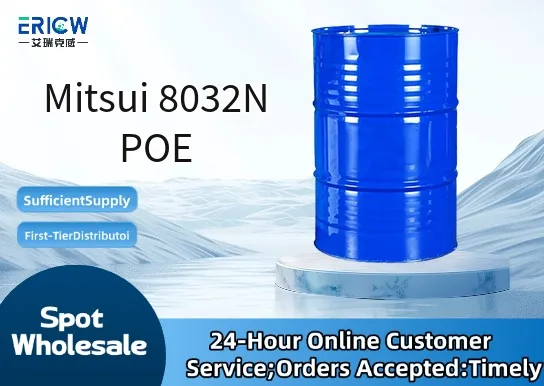
Highly stable polyolefin elastomer based on metallocene-catalyzed ethylene-octene copolymerization.
Excellent melt processability with low viscosity and narrow molecular weight distribution.
Superior flexibility, resilience, and low-temperature impact resistance.
Outstanding compatibility with polypropylene (PP) and polyethylene (PE) for thermoplastic elastomer blends.
Good UV and thermal stability suitable for long-term outdoor applications.
Automotive interior parts including instrument panels, door trims, and soft-touch surfaces.
Flexible packaging films requiring toughness, seal integrity, and clarity.
Medical tubing and soft components requiring biocompatibility and sterilization resistance.
Consumer goods such as grips, seals, gaskets, and overmolded handles.
Infrastructure applications including roofing membranes and geomembranes.
| Chemical Type | Metallocene-catalyzed ethylene-octene copolymer |
| Product Form | Pellets |
| Appearance | Off-white to light yellow granules |
| Density (g/cm³) | 0.865–0.870 |
| Melt Flow Rate (MFR, 190°C/2.16 kg, g/10 min) | 3.0–4.5 |
| Hardness (Shore A) | 32–36 |
| Ultimate Elongation (%) | ≥750 |
| Primary Applications | TPE blends, PP/PE modification, soft-touch overmolding |
Q1: What is Mitsui 8032N POE and how does it differ from conventional plasticizers?
A: Mitsui 8032N POE is a polyolester-based non-phthalate plasticizer designed for high-performance polymer systems requiring excellent low-temperature flexibility, hydrolytic stability, and low volatility. Unlike traditional phthalates or adipates, it offers superior compatibility with engineering thermoplastics and elastomers while maintaining low migration and good extraction resistance.
Q2: Which polymers is Mitsui 8032N POE typically compatible with?
A: It demonstrates broad compatibility with thermoplastic elastomers (TPEs), polyolefin-based compounds (e.g., TPO, TPV), certain polyesters, and specialty rubber blends. Performance in specific matrices should be verified through formulation testing, as compatibility may vary depending on polymer architecture and processing conditions.
Q3: How does Mitsui 8032N POE perform under elevated temperature and long-term aging conditions?
A: Due to its saturated polyolester structure, Mitsui 8032N POE exhibits enhanced thermal stability and oxidative resistance compared to many ester-based plasticizers. It maintains plasticizing efficiency and physical property retention during prolonged exposure to elevated temperatures, making it suitable for applications requiring extended service life in demanding environments.
Q4: Is Mitsui 8032N POE suitable for food-contact or medical-grade formulations?
A: Mitsui 8032N POE is not pre-approved for direct food-contact or medical device applications under major global regulatory frameworks. Its use in such applications requires full formulation-level compliance assessment, including extractables profiling and regulatory review by qualified experts, as final approval depends on the entire system—not just the plasticizer.
Contact With Us:
E-mail: wangxingqiang@ericwchem.com
Have a Questions? Call Us:
Add:
Building A1, Jiete Industrial Park, Huangpu District, Guangzhou City, Guangdong Province, China