English
 Español
 tiếng việt
 русский
Outstanding long-term thermal and oxidative stability for extended service life in demanding environments.
Excellent low-temperature flexibility and impact resistance down to –60 °C.
Superior compatibility with polyolefins and engineering thermoplastics, enabling seamless blending.
Low extractables and high purity—certified for use in food-contact-compliant compounds (FDA 21 CFR compliant).
Consistent melt flow behavior and narrow molecular weight distribution for stable processing.
Automotive interior trim components requiring soft-touch feel and weather resistance.
Flexible packaging films requiring seal integrity and puncture resistance.
Medical tubing and device housings requiring biocompatibility and sterilization stability.
Wire & cable jacketing for low-smoke, halogen-free insulation systems.
Thermoplastic elastomer (TPE) formulations for consumer goods and appliance seals.
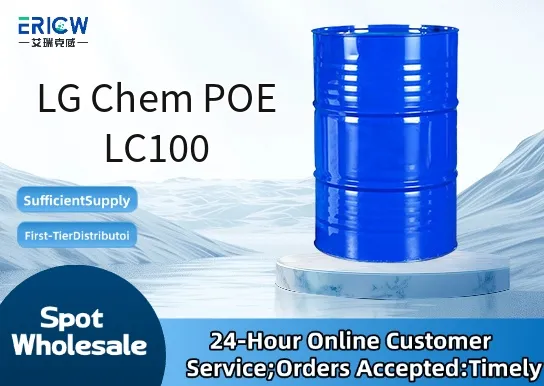
| Chemical Type | Polyolefin Elastomer (POE), ethylene-octene copolymer |
| Product Form | Pellets |
| Appearance | Off-white to light beige, free-flowing pellets |
| Melt Flow Rate (190 °C / 2.16 kg) | 1.0 ± 0.3 g/10 min |
| Density (ASTM D792) | 0.870 ± 0.005 g/cm³ |
| Hardness (Shore A, ASTM D2240) | 70 ± 3 |
| Ultimate Elongation (ASTM D412) | ≥ 700 % |
| Primary Applications | TPE modification, soft compound formulation, impact modifier |
Q1: What is the primary function of LG Chem POE LC100 in polymer formulations?
A: LG Chem POE LC100 is an ethylene-octene copolymer elastomer designed primarily as a toughening agent and impact modifier for rigid thermoplastics—especially polypropylene (PP) and engineering plastics—enhancing ductility, low-temperature impact resistance, and melt processability without significantly compromising stiffness.
Q2: Is LG Chem POE LC100 compatible with polypropylene-based compounds?
A: Yes, LG Chem POE LC100 exhibits excellent compatibility with isotactic and impact-modified polypropylene due to its similar backbone chemistry and favorable interfacial adhesion, enabling uniform dispersion and stable morphology in PP blends across standard compounding conditions.
Q3: How does LG Chem POE LC100 differ from conventional EPR or EPDM impact modifiers?
A: Unlike traditional EPR or EPDM rubbers, LG Chem POE LC100 offers narrower molecular weight distribution, higher crystallinity control, and superior shear stability during melt processing—resulting in more consistent mechanical performance, improved surface finish, and reduced risk of phase separation in high-shear applications such as injection molding.
Q4: What are the recommended drying and processing conditions for LG Chem POE LC100?
A: LG Chem POE LC100 is hygroscopic and should be dried prior to processing; typical recommendations include drying at 60–80 °C for 2–4 hours under dehumidified air. Processing temperatures generally range from 180 °C to 230 °C depending on the host polymer and equipment, with residence time kept moderate to preserve molecular integrity.
Contact With Us:
E-mail: wangxingqiang@ericwchem.com
Have a Questions? Call Us:
Add:
Building A1, Jiete Industrial Park, Huangpu District, Guangzhou City, Guangdong Province, China