English
 Español
 tiếng việt
 русский
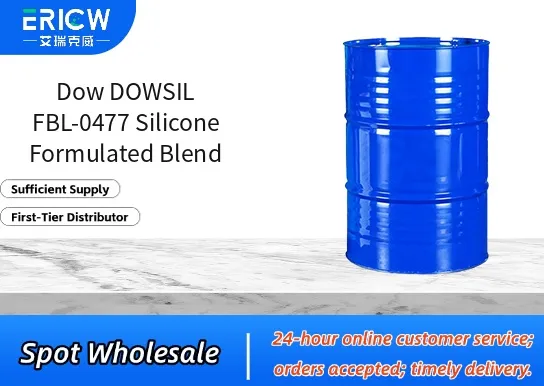
Engineered silicone-based formulated blend offering excellent thermal stability across wide operating temperatures.
Provides superior dielectric properties and electrical insulation performance in demanding environments.
Designed for easy processing with low viscosity and good compatibility with common elastomers and resins.
Exhibits low volatility and minimal outgassing, supporting high-reliability applications in electronics and aerospace.
Meets RoHS Directive 2011/65/EU requirements for restricted substances compliance.
Encapsulation and potting of sensitive electronic components including sensors and power modules.
Thermal interface material (TIM) formulation for heat dissipation in LED lighting and EV power electronics.
Base fluid or additive in specialty silicone gels for medical device cushioning and isolation.
Formulation ingredient for high-performance automotive under-hood sealants and adhesives.
Component in fire-retardant silicone composites for building and construction fire-stopping systems.
| Chemical Type | Dimethyl siloxane-based formulated blend with functional additives |
| Product Form | Liquid |
| Appearance | Clear to slightly hazy, colorless to pale yellow liquid |
| Primary Applications | Electronics encapsulation, thermal management, specialty elastomer modification |
| Key Features | Thermally stable, electrically insulating, low volatility, RoHS-compliant |
| Benefits | Enhanced long-term reliability, simplified processing, improved interfacial adhesion |
| Storage Conditions | Store in original sealed container at 15–25 °C; protect from moisture and direct sunlight |
| Shelf Life | 12 months from date of manufacture when stored as recommended |
Q1: What is the primary function of DOWSIL FBL-0477 in polymer systems?
A: DOWSIL FBL-0477 is a silicone-based formulated blend designed primarily as a processing aid and surface modifier. It helps reduce melt viscosity, improve flow characteristics during extrusion or injection molding, and enhance surface slip and gloss in thermoplastics and thermoplastic elastomers.
Q2: Is DOWSIL FBL-0477 compatible with common engineering resins such as polypropylene, polyethylene, and styrenics?
A: Yes, DOWSIL FBL-0477 is broadly compatible with polyolefins (including PP and PE), ABS, PS, and many thermoplastic elastomers. Compatibility should be verified in the final formulation due to potential interactions with additives, fillers, or other functional agents.
Q3: How is DOWSIL FBL-0477 typically incorporated into a polymer formulation?
A: It is generally introduced via masterbatch dilution or direct dry-blend addition prior to compounding. Due to its liquid nature and low volatility, it disperses readily during melt processing — no pre-drying is required. Dosage depends on formulation requirements but typically ranges from 0.1% to 2% by weight.
Q4: Does DOWSIL FBL-0477 affect the mechanical properties of the final compound?
A: At recommended use levels, it generally has minimal impact on tensile strength, elongation, or impact resistance. However, excessive loading may influence interfacial adhesion in filled or reinforced systems — optimization through application testing is advised.
Contact With Us:
E-mail: wangxingqiang@ericwchem.com
Have a Questions? Call Us:
Add:
Building A1, Jiete Industrial Park, Huangpu District, Guangzhou City, Guangdong Province, China