English
 Español
 tiếng việt
 русский
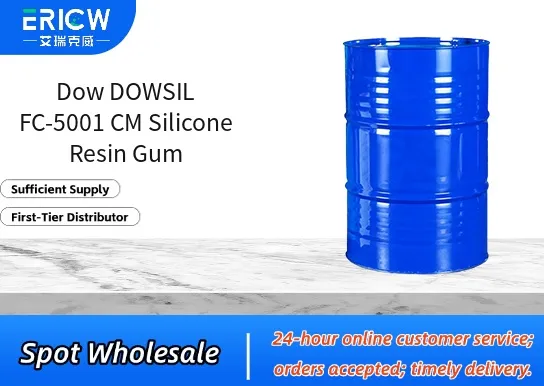
High-molecular-weight methyl silicone resin gum with excellent thermal stability up to 200 °C continuous service.
Self-crosslinking capability enables solvent-free film formation and enhanced hardness without added catalysts.
Outstanding release performance on high-temperature substrates including metal, ceramic, and engineered plastics.
Low volatility and minimal extractables, supporting compliance with stringent industrial hygiene and regulatory requirements.
Compatible with common organic solvents (e.g., toluene, xylene, isopropanol) for flexible formulation into coatings and impregnation systems.
Release coatings for high-temperature industrial liners and specialty papers.
Thermal barrier and protective topcoats for exhaust manifolds and turbocharger components.
Binders in high-temperature insulation composites and ceramic fiber mats.
Base resin for heat-resistant adhesives used in aerospace and automotive assembly.
Surface modification agent for enhancing hydrophobicity and abrasion resistance in protective coatings.
| Chemical Type | Methyl silicone resin gum |
| Product Form | Viscous liquid (gum) |
| Appearance | Clear to slightly hazy, colorless to pale yellow viscous liquid |
| Primary Applications | Release coatings, high-temperature protective coatings, binders for thermal insulation |
| Key Features | Self-crosslinking, solvent-soluble, thermally stable, low extractables |
| Benefits | Improved film integrity at elevated temperatures, simplified processing, reduced VOC contribution |
| Recommended Solvents | Toluene, xylene, VM&P naphtha, isopropanol |
| Storage Stability | 12 months at 5–30 °C in sealed original container |
Q1: What is the primary function of DOWSIL FC-5001 CM in coating and ink formulations?
A: DOWSIL FC-5001 CM is a silicone resin gum designed to enhance surface slip, improve mar resistance, and reduce coefficient of friction in cured film systems—particularly in high-performance industrial coatings, overprint varnishes, and gravure/flexographic inks.
Q2: How is DOWSIL FC-5001 CM typically incorporated into formulations?
A: It is generally added during the let-down or post-additive stage, often dissolved or dispersed in compatible organic solvents (e.g., xylene, mineral spirits) or reactive diluents prior to blending. Compatibility should be verified in the final vehicle system, especially with acrylics, polyesters, and epoxy-based resins.
Q3: Does DOWSIL FC-5001 CM require thermal curing to develop its full performance benefits?
A: Yes—optimal surface properties such as slip and abrasion resistance are realized after thermal crosslinking, typically during standard oven curing cycles used in coil coating or can manufacturing processes. Performance in ambient-cure systems may be limited and formulation-dependent.
Q4: Is DOWSIL FC-5001 CM suitable for food-contact applications?
A: While it is not pre-approved for direct food contact under global regulatory frameworks, it may be considered for indirect food-contact applications (e.g., exterior can coatings) subject to thorough evaluation by formulators—including migration testing and compliance verification against applicable regional requirements.
Contact With Us:
E-mail: wangxingqiang@ericwchem.com
Have a Questions? Call Us:
Add:
Building A1, Jiete Industrial Park, Huangpu District, Guangzhou City, Guangdong Province, China