English
 Español
 tiếng việt
 русский
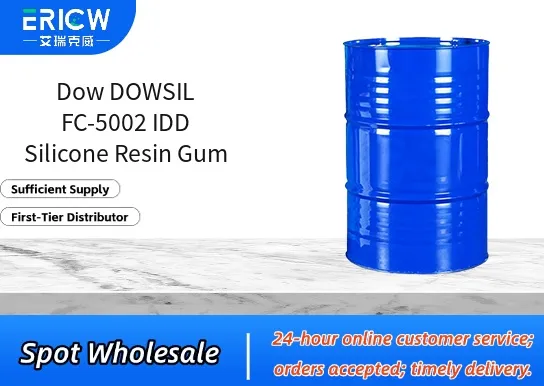
High-solids, solvent-based methylphenyl silicone resin gum offering excellent thermal stability and oxidative resistance.
Provides superior adhesion to diverse substrates including metals, ceramics, and cured silicone elastomers.
Delivers outstanding electrical insulation properties across wide temperature and humidity ranges.
Enables formulation flexibility for high-performance coatings, encapsulants, and bonding agents.
Compatible with common organic solvents (e.g., xylene, toluene) for easy integration into existing manufacturing processes.
High-temperature protective coatings for aerospace engine components and exhaust systems.
Dielectric encapsulants for power electronics and LED modules requiring long-term reliability.
Binders in ceramic and refractory coatings for industrial furnace linings.
Adhesive primers for silicone-to-metal bonding in automotive sensor housings.
Matrix resins in specialty composites for electrical insulation and thermal management.
| Chemical Type | Methylphenyl silicone resin gum |
| Product Form | Viscous liquid concentrate |
| Appearance | Clear to slightly hazy, pale yellow liquid |
| Solvent System | Aromatic hydrocarbons (e.g., xylene/toluene blend) |
| Solids Content | 60–65 wt% |
| Viscosity (25°C, mPa·s) | 15,000–25,000 (Brookfield, spindle #7, 2 rpm) |
| Density (25°C, g/cm³) | 0.98–1.02 |
| Flash Point (Tag Closed Cup, °C) | 42–48 |
Q1: What is the primary function of DOWSIL FC-5002 IDD in coating and ink formulations?
A: DOWSIL FC-5002 IDD is a silicone resin gum designed to enhance surface modification—improving slip, leveling, mar resistance, and substrate wetting—without significantly affecting cure chemistry or film integrity in thermosetting systems.
Q2: Is DOWSIL FC-5002 IDD compatible with common crosslinking chemistries such as melamine, isocyanate, or acrylic resins?
A: Yes—it demonstrates broad compatibility with amino-, urethane-, and acrylic-based thermoset systems. Its inert backbone minimizes interference with curing reactions, though optimal performance should be verified under specific formulation conditions and processing parameters.
Q3: How should DOWSIL FC-5002 IDD be incorporated into a formulation to ensure uniform dispersion?
A: It is typically added during the let-down stage under moderate agitation. Pre-dilution in a compatible solvent or carrier resin is recommended to facilitate homogeneous distribution, especially in high-solids or low-viscosity systems.
Q4: Does DOWSIL FC-5002 IDD contribute to pot life reduction or viscosity instability in reactive coatings?
A: Unlike many functional silicones, FC-5002 IDD exhibits minimal catalytic activity toward common crosslinkers and generally maintains formulation stability when used at typical dosage levels. Significant viscosity changes are uncommon if added post-catalyst and under controlled shear.
Contact With Us:
E-mail: wangxingqiang@ericwchem.com
Have a Questions? Call Us:
Add:
Building A1, Jiete Industrial Park, Huangpu District, Guangzhou City, Guangdong Province, China