English
 Español
 tiếng việt
 русский
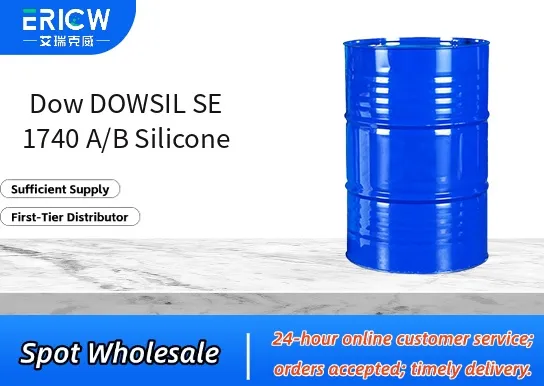
Two-part, addition-cure liquid silicone rubber system offering excellent flow and self-leveling properties.
Low viscosity before cure enables easy dispensing and precise filling of complex geometries.
High thermal stability with continuous service temperature up to 180 °C after full cure.
Excellent electrical insulation properties and low dielectric loss across wide frequency ranges.
UL 94 V-0 rated for flame resistance, supporting stringent safety requirements in electronic applications.
Encapsulation and potting of power electronics, including IGBT modules and EV inverters.
Thermal interface material (TIM) bonding and gap-filling in high-power LED assemblies.
Insulating coatings for automotive sensors and battery management system (BMS) components.
Sealing and protection of industrial control units exposed to harsh thermal and environmental conditions.
Underfill and conformal coating for miniaturized circuit boards in aerospace and defense systems.
| Chemical Type | Platinum-catalyzed addition-cure silicone elastomer |
| Product Form | Two-component liquid (Part A and Part B) |
| Appearance | Part A: Clear to light amber viscous liquid; Part B: Clear to light amber liquid |
| Primary Applications | Encapsulation, potting, thermal management, and electrical insulation |
| Key Features | Self-leveling, low shrinkage, high adhesion to common substrates |
| Benefits | Improved reliability under thermal cycling, reduced processing time vs. condensation-cure systems |
| Cure Mechanism | Addition cure (no by-products) |
| Storage Stability | 12 months at ≤25 °C in unopened containers |
Q1: What is the typical mixing ratio of Part A to Part B?
A: Dow DOWSIL SE 1740 A/B is a two-component addition-cure silicone system with a 1:1 mix ratio by weight. Accurate proportioning and thorough mixing are essential to achieve full cure and optimal performance.
Q2: How does humidity affect the curing process?
A: As an addition-cure (platinum-catalyzed) silicone, DOWSIL SE 1740 A/B is not moisture-sensitive and cures independently of ambient humidity. Curing is driven by thermal activation and catalyst activity, making it suitable for controlled industrial environments.
Q3: What substrates does this silicone adhere to without primers?
A: DOWSIL SE 1740 A/B exhibits good adhesion to many common engineering substrates—including metals, glass, and cured epoxy or polyurethane surfaces—when properly cleaned and prepared. Adhesion to low-surface-energy plastics (e.g., PP, PE) or heavily contaminated surfaces may require surface treatment or a compatible primer.
Q4: Is post-cure required to achieve full mechanical properties?
A: While DOWSIL SE 1740 A/B achieves handling strength at room temperature over several hours, a controlled thermal post-cure (e.g., 2–4 hours at 100–150 °C) is recommended to maximize crosslink density, thermal stability, and long-term reliability in demanding applications.
Contact With Us:
E-mail: wangxingqiang@ericwchem.com
Have a Questions? Call Us:
Add:
Building A1, Jiete Industrial Park, Huangpu District, Guangzhou City, Guangdong Province, China