English
 Español
 tiếng việt
 русский
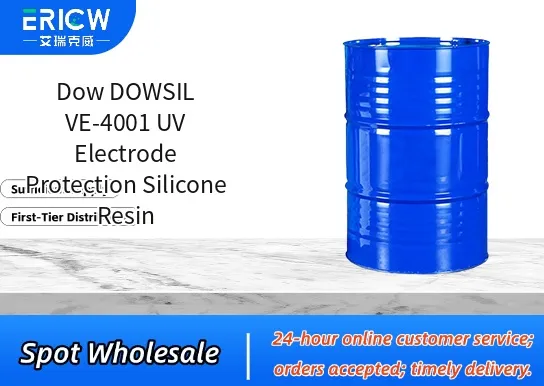
UV-curable silicone resin formulation enabling rapid, low-temperature curing without thermal stress on sensitive electrodes.
Excellent dielectric insulation properties with high volume resistivity (>1 × 10¹⁵ Ω·cm) and low dielectric loss.
Superior chemical resistance to solvents, acids, bases, and ozone—maintaining integrity in harsh industrial environments.
Flexible, non-yellowing cured film with outstanding adhesion to glass, stainless steel, platinum, and ceramic electrode substrates.
Low outgassing profile compliant with ISO 15832 and NASA outgassing standards for vacuum and precision instrumentation use.
Protective encapsulation of pH, ORP, and ion-selective electrodes in analytical instrumentation.
Insulating coating for electrochemical sensors in water quality monitoring systems.
Dielectric barrier layer for medical-grade biosensors and implantable diagnostic electrodes.
UV-cured protective overcoat for semiconductor process electrodes exposed to plasma or etchant vapors.
Surface passivation of reference electrodes in battery testing and fuel cell R&D equipment.
| Chemical Type | UV-curable phenyl-modified silicone resin |
| Product Form | Clear, low-viscosity liquid (solvent-free) |
| Appearance | Colorless to pale yellow, transparent liquid |
| Primary Applications | Electrode protection, sensor encapsulation, dielectric coating |
| Key Features | UV-curable, solvent-free, flexible cured film, high dielectric strength |
| Benefits | Enables room-temperature processing, minimizes thermal degradation risk, enhances long-term electrode stability |
| Curing Requirement | UV-A (320–390 nm), typical dose: 1.5–3.0 J/cm² |
| Storage Conditions | Store at 5–25°C in opaque containers; protect from UV exposure prior to use |
Q1: What is the primary function of DOWSIL VE-4001 in electrode protection applications?
A: DOWSIL VE-4001 is a UV-curable silicone resin specifically engineered to form durable, electrically insulating, and chemically resistant protective coatings on electrodes—particularly those used in demanding electrochemical or sensing environments where long-term stability under UV exposure and thermal cycling is required.
Q2: Is DOWSIL VE-4001 compatible with common electrode substrates such as stainless steel, platinum, and conductive ceramics?
A: Yes, DOWSIL VE-4001 demonstrates good adhesion to a range of electrode materials including stainless steel, platinum, gold, and alumina-based ceramics, especially when appropriate surface preparation—such as plasma treatment or solvent cleaning—is applied prior to coating.
Q3: How does the UV-cure profile of DOWSIL VE-4001 compare to conventional thermal-cure silicone systems?
A: DOWSIL VE-4001 enables rapid, low-temperature curing via standard UV sources (e.g., medium-pressure mercury lamps or LED systems at 365 nm), eliminating the need for high-temperature ovens and minimizing thermal stress on sensitive electrode assemblies or underlying electronics.
Q4: Can DOWSIL VE-4001 be formulated with additives such as fillers or pigments without compromising UV cure efficiency?
A: It can accommodate select non-UV-absorbing additives—such as silica or alumina micro-fillers—in moderate amounts, but highly absorbing or scattering components may reduce cure depth and surface conversion. Formulation adjustments and process validation are recommended for each specific additive system.
Q5: What storage conditions are recommended to maintain shelf life and performance consistency?
A: Store unopened containers in a cool, dry place away from direct sunlight and UV sources; refrigeration is not required. Once opened, minimize exposure to ambient moisture and oxygen, and use within the timeframe specified on the product label to ensure optimal reactivity and film integrity.
Contact With Us:
E-mail: wangxingqiang@ericwchem.com
Have a Questions? Call Us:
Add:
Building A1, Jiete Industrial Park, Huangpu District, Guangzhou City, Guangdong Province, China