English
 Español
 tiếng việt
 русский
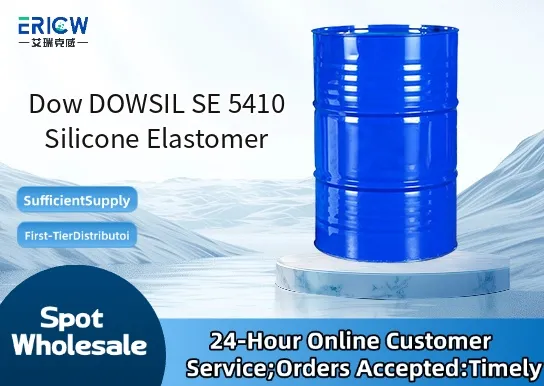
High-transparency, platinum-cured silicone elastomer with excellent optical clarity and UV stability.
Low compression set and outstanding resilience for long-term sealing performance under dynamic conditions.
Biocompatibility compliant with USP Class VI and ISO 10993-5/10, suitable for medical device contact.
Excellent thermal stability across –60 °C to +200 °C continuous service range.
Easy processing via liquid injection molding (LIM) with low viscosity and controlled pot life.
Seals and gaskets for implantable and wearable medical devices.
Optical components in diagnostic equipment, including light guides and sensor encapsulants.
Soft-touch overmolds for handheld healthcare instruments and surgical tools.
Pharmaceutical primary packaging components requiring extractables & leachables control.
| Chemical Type | Platinum-cured addition-cure liquid silicone rubber (LSR) |
| Product Form | Two-part liquid system (Part A + Part B) |
| Appearance | Clear, viscous liquid (Part A); clear, low-viscosity catalyst (Part B) |
| Shore A Hardness (Cured) | 50 ± 3 |
| Tensile Strength (ASTM D412) | 8.5 MPa (typical) |
| Elongation at Break (ASTM D412) | 550% (typical) |
| Volume Resistivity (ASTM D257) | >1 × 10¹⁵ Ω·cm |
| Biocompatibility | USP Class VI, ISO 10993-5 (cytotoxicity), ISO 10993-10 (sensitization & irritation) |
Q1: What is the primary function of DOWSIL SE 5410 in silicone formulations?
A: DOWSIL SE 5410 is a high-consistency silicone elastomer designed to act as a processing aid and rheology modifier. It enhances green strength, improves extrudability, and supports dimensional stability during curing—particularly in high-fill or complex-shape silicone rubber compounds.
Q2: Is DOWSIL SE 5410 compatible with both platinum-cure and peroxide-cure silicone systems?
A: Yes, DOWSIL SE 5410 is broadly compatible with both addition-cure (platinum-catalyzed) and condensation-cure (peroxide-initiated) silicone elastomer systems. Compatibility should be verified under actual processing conditions, especially when high catalyst or inhibitor loadings are present.
Q3: How should DOWSIL SE 5410 be incorporated into a silicone compound?
A: It is typically added during the masterbatch stage using standard high-shear mixing equipment (e.g., two-roll mills or internal mixers). For optimal dispersion, it is recommended to pre-mix with a portion of the base polymer before introducing fillers or curatives.
Q4: Does DOWSIL SE 5410 affect the final mechanical properties of cured silicone parts?
A: When used at typical dosage levels, it generally maintains or slightly enhances tensile strength and elongation while improving tear resistance and compression set performance. Significant property shifts may occur at higher loadings, so optimization is recommended for each application.
Contact With Us:
E-mail: wangxingqiang@ericwchem.com
Have a Questions? Call Us:
Add:
Building A1, Jiete Industrial Park, Huangpu District, Guangzhou City, Guangdong Province, China