English
 Español
 tiếng việt
 русский
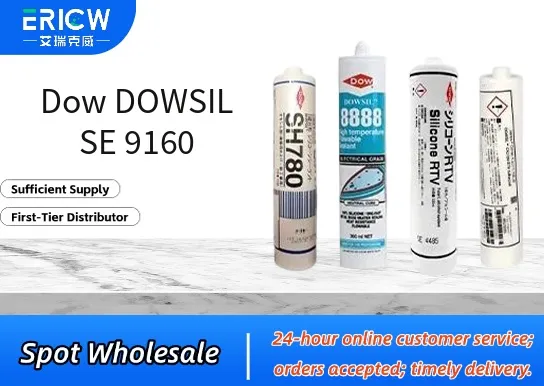
High-performance, addition-cure liquid silicone rubber (LSR) with excellent thermal stability and low compression set.
Optimized for high-speed injection molding with rapid cure kinetics and minimal post-cure requirements.
Exceptional flow characteristics and low viscosity enabling precise replication of fine features in complex molds.
Biocompatibility support per ISO 10993-5/-10/-11 and USP Class VI compliance for medical device applications.
Low extractables profile suitable for sensitive applications including drug delivery components and implantable device housings.
Medical-grade seals, gaskets, and diaphragms for infusion pumps and wearable drug delivery systems.
Components for minimally invasive surgical instruments requiring dimensional stability and sterilization resistance.
Encapsulants and protective coatings for implantable electronic sensors and neurostimulation devices.
Soft-touch overmolded grips and ergonomic interfaces in diagnostic and monitoring equipment.
Microfluidic device components requiring high-resolution replication and chemical inertness.
| Chemical Type | Platinum-catalyzed addition-cure liquid silicone rubber (LSR) |
| Product Form | Two-part system (Part A: base; Part B: catalyst), supplied separately |
| Appearance (Uncured) | Translucent to milky viscous liquid |
| Shore A Hardness (Cured, 7 days @ 23°C) | 60 ± 3 |
| Primary Applications | Medical devices, drug delivery systems, diagnostics, microfluidics |
| Key Features | Low volatility, high purity, controlled rheology, excellent adhesion to select substrates |
| Benefits | Reduced cycle time, minimal flash, consistent part-to-part repeatability, low particulate generation |
| Regulatory Compliance | ISO 10993-5/-10/-11 tested; USP Class VI compliant; RoHS 3 & REACH compliant |
| Common Compatible Systems | Suitability |
| Polypropylene (PP) and Polyethylene (PE) substrates (with primer) | Recommended – Requires Dow SILASTIC® Primer P-840 or equivalent for reliable adhesion |
| Stainless steel (316L) and anodized aluminum tooling | Highly Recommended – Excellent release and minimal mold fouling |
| Polyetherimide (PEI) and polyphenylsulfone (PPSU) | Suitable – Good interfacial compatibility for overmolding without delamination |
| Glass and fused silica surfaces | Recommended – Low surface interaction; ideal for microfluidic channel sealing |
Q1: What is the CAS Registry Number for Dow DOWSIL SE 9160?
A: Dow DOWSIL SE 9160 is a proprietary multi-component formulation; individual components have CAS numbers (e.g., vinyl-terminated PDMS base: 68083-19-2; platinum-divinylsiloxane complex catalyst: 138692-19-4), but the final compounded product does not carry a single CAS number.
Q2: What is the recommended mix ratio and minimum processing temperature?
A: Mix ratio is 1:1 by weight (Part A : Part B). Minimum recommended molding temperature is 110°C; optimal range is 130–160°C for full cure in ≤60 seconds. Lower temperatures require extended dwell time and optional post-cure.
Q3: How does DOWSIL SE 9160 compare to DOWSIL SE 9170 in terms of extraction performance?
A: DOWSIL SE 9160 demonstrates lower volatile organic compound (VOC) and extractable siloxane levels versus SE 9170, particularly under accelerated extraction conditions (e.g., 72h in ethanol at 40°C), making it preferred for implantable and long-term drug contact applications.
Q4: Is migration testing data available for pharmaceutical packaging use?
A: Yes — migration studies per ICH Q5C and USP <87>/<88> are available upon request under NDA. Data confirms negligible migration (<0.1 ppm) into aqueous and oily simulants after 30-day storage at 40°C.
Contact With Us:
E-mail: wangxingqiang@ericwchem.com
Have a Questions? Call Us:
Add:
Building A1, Jiete Industrial Park, Huangpu District, Guangzhou City, Guangdong Province, China