English
 Español
 tiếng việt
 русский
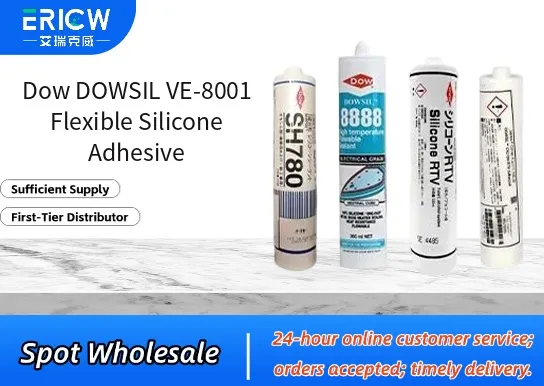
Highly flexible, low-modulus silicone formulation enabling exceptional movement accommodation (±50% joint movement capability).
Excellent adhesion to common substrates including glass, aluminum, anodized metals, painted surfaces, and many plastics without primer.
Fast skin-over time (~15–20 minutes at 23°C/50% RH) with full cure in 7 days under ambient conditions.
Outstanding resistance to UV radiation, ozone, extreme temperatures (–40°C to +150°C continuous), and weathering.
Neutral-cure acetoxy system—low odor, non-corrosive to metals, and safe for sensitive electronic components.
Structural glazing and perimeter sealing of architectural curtain walls and insulating glass units (IGUs).
Sealing and bonding of solar panel frames, junction boxes, and PV module edge protection.
Electronic encapsulation and conformal coating for LED lighting assemblies and power electronics housings.
Automotive interior trim bonding where vibration damping and thermal cycling resistance are critical.
Medical device assembly requiring biocompatibility-compliant elastomeric adhesion and low extractables.
| Chemical Type | Acetoxy-cure, room-temperature vulcanizing (RTV) silicone elastomer |
| Product Form | Thixotropic paste, single-component, ready-to-use |
| Appearance | Opaque white or translucent beige, smooth homogeneous paste |
| Shore A Hardness (7 days, 23°C/50% RH) | 25–30 |
| Tensile Strength (ASTM C1135) | ~1.8 MPa |
| Elongation at Break (ASTM C1135) | ≥450% |
| Primary Applications | Non-structural bonding, sealing, gasketing, and encapsulation |
| Regulatory Compliance | Meets UL 94 HB flammability rating; RoHS 2015/863 compliant; REACH SVHC-free (as declared) |
| Common Compatible Systems | Suitability |
| Anodized Aluminum & Powder-Coated Steel | Highly Recommended – Excellent adhesion without primer; stable long-term interface |
| Tempered Glass & Low-E Coated Glass | Highly Recommended – Non-staining, no interfacial degradation observed |
| Poly(methyl methacrylate) (PMMA) & Polycarbonate | Recommended – Good adhesion with optional surface cleaning (isopropanol wipe) |
| EPDM Rubber Gaskets & Silicone Elastomer Seals | Suitable – Compatible for co-curing interfaces; no swelling or softening |
Q1: What is the CAS Registry Number for DOWSIL VE-8001?
A: The CAS number for DOWSIL VE-8001 is 68953-58-2 (for the base polymer system); full formulation CAS is proprietary and not publicly disclosed per Dow confidentiality policy.
Q2: What is the recommended bead size and joint depth for optimal performance?
A: Minimum joint depth should be ≥6 mm; width-to-depth ratio ideally 2:1. For dynamic joints, design for ≥12 mm minimum width to accommodate ±50% movement per ASTM C1135.
Q3: How does VE-8001 compare to DOWSIL 3140 or 995 in terms of flexibility and cure speed?
A: VE-8001 offers lower modulus and higher elongation than 3140 (adhesive sealant) and faster skin-over than 995 (high-strength structural silicone), making it optimized for vibration-dampening and rapid handling—not for high-load structural anchorage.
Q4: Is VE-8001 suitable for applications requiring FDA 21 CFR 175.300 compliance or USP Class VI testing?
A: VE-8001 is not FDA-listed or USP Class VI certified. It is intended for industrial, architectural, and electronic use—not direct food contact or implantable medical devices. For regulated healthcare applications, consult Dow’s DOWSIL™ Q2-3000 series.
Q5: Are volatile siloxanes (e.g., D4, D5) or extractables present above regulatory thresholds?
A: DOWSIL VE-8001 is formulated to meet stringent low-VOC and low-extractables requirements per ISO 10993-12 and EU REACH. Total cyclic siloxane (D4–D6) content is <100 ppm as measured by GC-MS; well below ECHA restriction limits.
Contact With Us:
E-mail: wangxingqiang@ericwchem.com
Have a Questions? Call Us:
Add:
Building A1, Jiete Industrial Park, Huangpu District, Guangzhou City, Guangdong Province, China