English
 Español
 tiếng việt
 русский
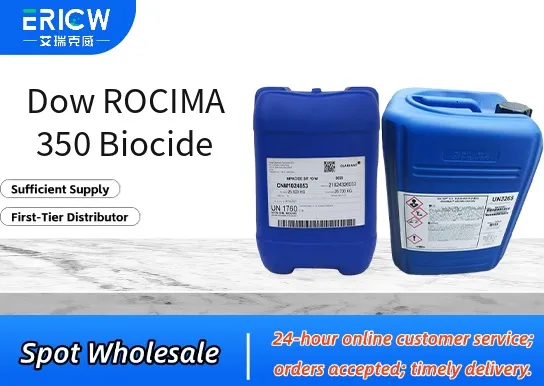
Broad-spectrum efficacy against bacteria, fungi, and algae in water-based industrial systems.
Stable performance across a wide pH range (pH 4–10) and compatible with common water treatment additives.
Low toxicity profile with favorable environmental and regulatory acceptance for non-potable industrial use.
Effective at low dosing levels (typically 50–200 ppm), supporting cost-efficient system protection.
Non-oxidizing chemistry that minimizes corrosion risk to metal components and avoids interference with oxidant-based control programs.
Cooling water systems in HVAC and industrial heat exchange applications.
Process water circuits in paper manufacturing and pulp mill operations.
Recirculating water systems in metalworking fluid sumps and machining centers.
Paint, coating, and adhesive formulations requiring in-can preservation.
Industrial cleaning solutions and detergent concentrates susceptible to microbial spoilage.
| Chemical Type | Isothiazolinone-based biocide blend |
| Product Form | Liquid concentrate |
| Appearance | Clear, pale yellow to amber liquid |
| pH (as supplied) | 2.5–4.5 |
| Density (20°C) | 1.10–1.15 g/cm³ |
| Solubility | Miscible with water and common polar solvents |
| Primary Applications | Non-potable industrial water systems, coatings, adhesives, and metalworking fluids |
| Key Features | Broad-spectrum, non-oxidizing, low-dose, pH-stable |
Q1: What is the primary mode of action of Dow ROCIMA 350 Biocide?
A: Dow ROCIMA 350 Biocide functions as a broad-spectrum preservative, primarily inhibiting the growth of bacteria, yeasts, and molds through disruption of essential cellular processes, including membrane integrity and metabolic activity.
Q2: In which types of industrial formulations is Dow ROCIMA 350 Biocide typically used?
A: It is commonly employed in water-based industrial products such as metalworking fluids, latex paints and coatings, adhesives, sealants, construction chemicals, and cleaning concentrates—especially where long-term microbial stability and compatibility with anionic and nonionic systems are required.
Q3: Is Dow ROCIMA 350 Biocide compatible with common surfactants and thickeners?
A: Yes, it demonstrates good compatibility with a wide range of anionic, nonionic, and amphoteric surfactants, as well as common rheology modifiers—including associative and non-associative thickeners—making it suitable for complex formulation matrices.
Q4: How should Dow ROCIMA 350 Biocide be added to a formulation?
A: It is recommended to add Dow ROCIMA 350 Biocide during the cool-down phase or at ambient temperature, after pH adjustment and dissolution of other key components, to ensure optimal stability and performance. Pre-dilution with water or a compatible solvent may improve dispersion in viscous systems.
Q5: What is the typical dosage range for effective preservation?
A: Effective dosage generally ranges from 0.1% to 2% by weight of the final formulation, depending on microbial challenge level, pH, temperature exposure, and presence of organic nutrients. Final concentration should be determined through challenge testing under representative conditions.
Contact With Us:
E-mail: wangxingqiang@ericwchem.com
Have a Questions? Call Us:
Add:
Building A1, Jiete Industrial Park, Huangpu District, Guangzhou City, Guangdong Province, China