English
 Español
 tiếng việt
 русский
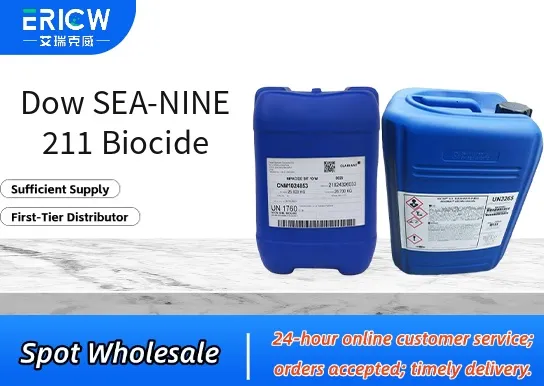
Highly effective against marine microfouling organisms, including bacteria, algae, and barnacle larvae.
Non-copper, non-tin formulation compliant with current global antifouling regulations.
Controlled leaching technology ensures long-term performance and reduced environmental impact.
Compatible with a broad range of marine coatings, including acrylics, vinyls, and polyurethanes.
Stable under prolonged UV exposure and seawater immersion conditions.
Antifouling paints for commercial shipping vessels.
Protective coatings for offshore oil & gas platforms and subsea infrastructure.
Fouling control in marine aquaculture netting and equipment.
Coatings for recreational boats and yachts operating in diverse salinity environments.
| Chemical Type | Organotin-free, synthetic heterocyclic biocide (4,5-dichloro-2-n-octyl-3(2H)-isothiazolone) |
| Product Form | Free-flowing crystalline powder |
| Appearance | White to off-white crystalline solid |
| Solubility in Water | Low (0.2–0.3 g/L at 20°C) |
| Melting Point | 68–72°C |
| pH Stability Range | 4–10 (in formulated systems) |
| Primary Applications | Marine antifouling coatings, fouling-release systems |
| Key Features | Non-bioaccumulative, low aquatic toxicity profile relative to legacy biocides |
Q1: What is the primary mode of action of Dow SEA-NINE 211 Biocide?
A: Dow SEA-NINE 211 Biocide functions as a broad-spectrum antimicrobial agent that inhibits microbial growth by interfering with essential cellular processes, including membrane integrity and metabolic activity. Its active ingredient is designed for sustained efficacy against bacteria, fungi, and algae in demanding industrial environments.
Q2: In which types of formulations is Dow SEA-NINE 211 Biocide commonly used?
A: It is widely incorporated into water-based industrial coatings, marine antifouling paints, adhesives, sealants, and construction materials where long-term protection against microbial degradation and biofilm formation is required. Its stability supports compatibility with many common polymer systems and pigments.
Q3: How should Dow SEA-NINE 211 Biocide be handled and stored to maintain performance?
A: Store in original, tightly sealed containers in a cool, dry, and well-ventilated area away from direct sunlight and strong oxidizing agents. Avoid prolonged exposure to elevated temperatures or moisture ingress during handling, as these may affect product stability over time.
Q4: Is Dow SEA-NINE 211 Biocide compatible with other biocides or preservatives?
A: Compatibility with other antimicrobial agents depends on formulation pH, solvent system, and concentration. While synergistic effects have been observed in some cases, laboratory compatibility testing is recommended before co-formulation to ensure chemical stability and avoid antagonism or precipitation.
Q5: What regulatory status applies to Dow SEA-NINE 211 Biocide for use in marine applications?
A: Dow SEA-NINE 211 Biocide is approved for use in antifouling coatings under relevant regional biocidal product regulations, including the EU Biocidal Products Regulation (BPR) for product-type 21 (antifouling products). Regulatory status may vary by country; users should consult local authorities and review current product authorizations prior to commercial use.
Contact With Us:
E-mail: wangxingqiang@ericwchem.com
Have a Questions? Call Us:
Add:
Building A1, Jiete Industrial Park, Huangpu District, Guangzhou City, Guangdong Province, China