English
 Español
 tiếng việt
 русский
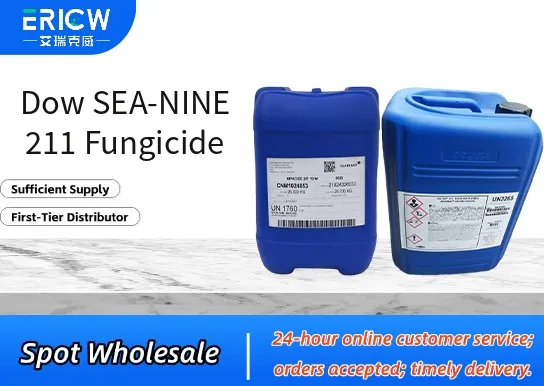
Highly effective against marine biofouling organisms, including diatoms, barnacles, and green algae.
Non-biocidal mode of action—disrupts settlement signaling without persistent toxicity to non-target species.
Compatible with a broad range of antifouling paint systems, including epoxy, vinyl, and acrylic-based coatings.
Stable under long-term immersion and resistant to hydrolysis in seawater environments.
Regulatory compliant for use in major maritime markets, including EPA-registered and EU Biocidal Products Regulation (BPR) approved.
Antifouling coatings for commercial shipping vessels.
Protective coatings for offshore oil & gas platforms and subsea infrastructure.
Fouling control in aquaculture netting and floating containment systems.
Marine coatings for naval defense fleets and government vessels.
Coatings for recreational boats and yachts operating in temperate and tropical waters.
| Chemical Type | Organotin-free synthetic antifoulant (4,5-dichloro-2-n-octyl-4-isothiazolin-3-one derivative) |
| Product Form | Free-flowing white to off-white crystalline powder |
| Appearance | Crystalline solid, odorless |
| Primary Applications | Marine antifouling coatings, fouling-release systems, submerged infrastructure protection |
| Solubility | Low water solubility; soluble in common organic solvents (e.g., xylene, butyl acetate, MEK) |
| Storage Stability | 24 months at 5–25°C in original sealed container |
| Key Features | Non-persistent, low environmental impact, settlement inhibition rather than biocidal kill |
| Benefits | Extended coating service life, reduced dry-docking frequency, compliance with evolving environmental regulations |
Q1: What is the primary mode of action of SEA-NINE 211?
A: SEA-NINE 211 functions as a broad-spectrum antifouling biocide, primarily inhibiting microbial growth—including bacteria, fungi, and algae—through disruption of cellular energy metabolism and membrane integrity. Its efficacy is particularly notable in marine and industrial water systems where biofilm formation is a concern.
Q2: Is SEA-NINE 211 suitable for use in coatings and paints?
A: Yes, SEA-NINE 211 is widely used in marine antifouling coatings, including self-polishing copolymer (SPC) and fouling-release systems. It provides long-term protection against macrofouling organisms and complements other active ingredients in multi-biocide formulations.
Q3: How stable is SEA-NINE 211 under typical storage and processing conditions?
A: SEA-NINE 211 demonstrates good thermal and hydrolytic stability in formulated systems, especially when protected from prolonged exposure to strong UV radiation and extreme pH conditions. Stability in final products is formulation-dependent and should be verified through accelerated aging studies.
Q4: What regulatory status applies to SEA-NINE 211 in major markets?
A: SEA-NINE 211 is registered or approved for specific antifouling applications in several key regions, including the United States (EPA-registered), Japan, and select countries in Asia-Pacific. Regulatory acceptance varies by end-use, concentration, and product category—formulators are advised to consult local regulatory authorities and Dow’s technical support for compliance guidance.
Contact With Us:
E-mail: wangxingqiang@ericwchem.com
Have a Questions? Call Us:
Add:
Building A1, Jiete Industrial Park, Huangpu District, Guangzhou City, Guangdong Province, China