English
 Español
 tiếng việt
 русский
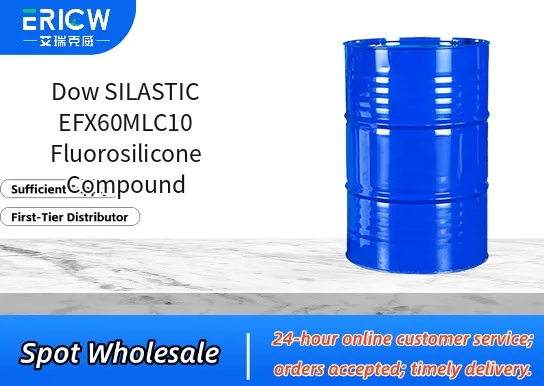
Excellent resistance to fuels, oils, and aggressive hydrocarbon-based fluids across a wide temperature range.
Outstanding low-temperature flexibility down to –55 °C (–67 °F) without significant loss of elasticity.
Superior compression set resistance, maintaining sealing integrity after prolonged thermal and mechanical stress.
Good electrical insulation properties with stable dielectric performance over time and varying environmental conditions.
Processable via standard high-temperature vulcanization (HTV) silicone manufacturing methods including extrusion and compression molding.
Aerospace fuel system seals and gaskets exposed to jet fuels (e.g., JP-4, JP-8) and synthetic lubricants.
Automotive under-hood components requiring resistance to engine oils, transmission fluids, and turbocharger environments.
Oil & gas downhole instrumentation seals subjected to sour gas (H₂S), crude oil, and elevated temperatures.
Industrial hydraulic system O-rings and diaphragms operating in contact with phosphate ester-based fire-resistant fluids.
Military-grade electronic enclosures and connector seals demanding combined fluid resistance and environmental durability.
| Chemical Type | Fluorosilicone elastomer (FVMQ) |
| Product Form | High-consistency rubber (HCR), uncured compound |
| Appearance | Light amber to tan colored, homogeneous gum stock |
| Hardness (Shore A, ASTM D2240) | 60 ± 3 |
| Specific Gravity (ASTM D297) | 1.55 – 1.65 |
| Cure System | Peroxide-curable |
| Primary Applications | Dynamic and static seals, gaskets, diaphragms, and vibration dampers |
| Key Features | Fuel/oil resistance, low-temp flexibility, compression set resistance, HTV processability |
Q1: What are the primary performance advantages of EFX60MLC10 compared to standard silicone elastomers?
A: EFX60MLC10 offers significantly enhanced resistance to fuels, oils, and polar solvents—such as aviation kerosene, hydraulic fluids, and chlorinated hydrocarbons—while retaining the broad temperature range, compression set resistance, and low-temperature flexibility characteristic of fluorosilicones. It is especially suited for dynamic sealing applications where both chemical exposure and thermal cycling are present.
Q2: Is EFX60MLC10 suitable for aerospace or automotive fuel system components?
A: Yes—EFX60MLC10 is formulated to meet demanding requirements in aerospace and high-performance automotive applications, including O-rings, gaskets, and diaphragms exposed to jet fuels (e.g., JP-8), synthetic lubricants, and aggressive brake fluids. Its fluorosilicone chemistry provides a balanced profile of fluid resistance, mechanical integrity, and long-term stability under vibration and thermal stress.
Q3: How is EFX60MLC10 typically processed, and what curing systems are recommended?
A: EFX60MLC10 is a two-part, platinum-catalyzed liquid silicone rubber (LSR) designed for injection molding and transfer molding. It requires precise metering and mixing of Part A (base) and Part B (catalyst), followed by heat-curing at elevated temperatures. Post-cure is generally recommended to optimize physical properties and extractables profile, particularly for critical sealing applications.
Q4: Does EFX60MLC10 comply with FDA or USP Class VI requirements for medical use?
A: EFX60MLC10 is not specifically formulated or certified for direct food-contact or implantable medical applications. While fluorosilicones may be used in certain non-implantable medical device housings or fluid-handling components, end-use compliance depends on full system validation—including processing conditions, post-cure protocols, and finished part testing—against applicable regulatory standards.
Contact With Us:
E-mail: wangxingqiang@ericwchem.com
Have a Questions? Call Us:
Add:
Building A1, Jiete Industrial Park, Huangpu District, Guangzhou City, Guangdong Province, China