English
 Español
 tiếng việt
 русский
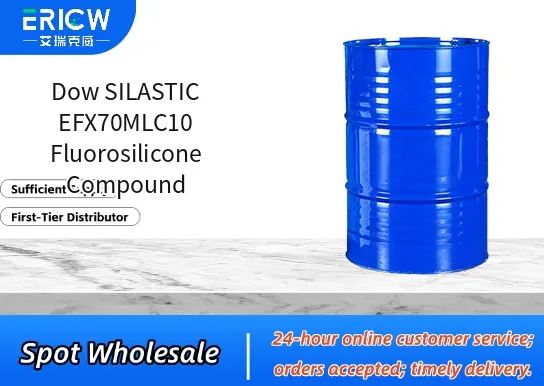
Excellent resistance to fuels, oils, and aggressive hydrocarbon-based chemicals across wide temperature ranges.
Outstanding low-temperature flexibility down to –60 °C with retained elastomeric performance.
High thermal stability, maintaining mechanical integrity up to 200 °C for extended service life.
Good compression set resistance, ensuring reliable sealing performance after prolonged compression.
Processable via standard high-temperature vulcanization (HTV) methods including extrusion and compression molding.
Aerospace fuel system seals and gaskets exposed to jet fuels and synthetic lubricants.
Automotive under-hood components requiring resistance to engine oils and transmission fluids.
Oil & gas downhole instrumentation seals operating in sour gas (H₂S) and hydrocarbon environments.
Industrial fluid handling systems where compatibility with aromatic solvents and chlorinated agents is critical.
Medical device components requiring biocompatibility support and chemical resistance during sterilization.
| Chemical Type | Fluorosilicone elastomer (FVMQ) |
| Product Form | Uncured gum stock (high-consistency rubber) |
| Appearance | Light amber to pale yellow, homogeneous sheet or slab |
| Primary Applications | Static and dynamic sealing in aggressive chemical environments |
| Key Features | Fuel/oil resistance, low-temp flexibility, thermal stability, compression set resistance |
| Processing Method | High-temperature vulcanization (HTV); compatible with extrusion, calendering, compression molding |
| Cure System | Peroxide-curable |
| Shelf Life | 12 months at ≤25 °C in original unopened packaging |
Q1: What are the primary performance advantages of EFX70MLC10 compared to standard silicone elastomers?
A: EFX70MLC10 combines the broad temperature resilience and compression set resistance of silicone with significantly improved resistance to fuels, oils, solvents, and aggressive chemicals—especially aliphatic and aromatic hydrocarbons—due to its fluorosilicone chemistry. This makes it suitable for demanding aerospace, automotive, and industrial sealing applications where standard silicones may swell or degrade.
Q2: Is EFX70MLC10 suitable for high-temperature dynamic sealing applications?
A: Yes—it is formulated for continuous service at elevated temperatures, typically up to 200 °C, while retaining excellent elastic recovery and low compression set under cyclic thermal and mechanical stress. Its performance in dynamic environments benefits from balanced processability and crosslink density, supporting reliable long-term sealing integrity.
Q3: How is EFX70MLC10 typically processed, and what curing systems are recommended?
A: EFX70MLC10 is a platinum-cure liquid silicone rubber (LSR) designed for high-precision injection molding. It requires a platinum-based catalyst system and is typically cured using heat activation between 100 °C and 180 °C. Optimal processing depends on part geometry and equipment parameters, and Dow recommends conducting small-scale trials to fine-tune cycle time and cure profile.
Q4: Does EFX70MLC10 require special handling or storage considerations?
A: Yes—like other platinum-cure LSRs, EFX70MLC10 is sensitive to catalyst poisons such as sulfur-, nitrogen-, phosphorus-, and tin-containing compounds. It should be stored in sealed containers at controlled ambient temperatures and handled using clean, dedicated equipment to avoid contamination that could inhibit cure or compromise physical properties.
Contact With Us:
E-mail: wangxingqiang@ericwchem.com
Have a Questions? Call Us:
Add:
Building A1, Jiete Industrial Park, Huangpu District, Guangzhou City, Guangdong Province, China