English
 Español
 tiếng việt
 русский
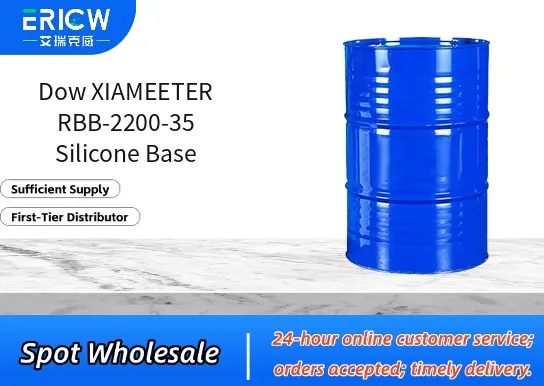
High-solids, low-viscosity silicone base designed for easy incorporation into formulated systems.
Offers excellent thermal stability and oxidative resistance across extended service temperatures.
Provides superior hydrophobicity and moisture barrier performance in protective coatings.
Compatible with common organic solvents and crosslinkers used in industrial coating formulations.
Delivers consistent rheological behavior and storage stability under ambient conditions.
High-performance release coatings for paper and film substrates.
Water-repellent additives in architectural and industrial protective coatings.
Base component in heat-resistant silicone elastomer precursors.
Functional additive in textile finishing agents for durable water and oil repellency.
Formulation ingredient for specialty adhesives requiring enhanced flexibility and weather resistance.
| Chemical Type | Linear polydimethylsiloxane (PDMS) base polymer |
| Product Form | Liquid |
| Appearance | Clear, colorless to pale yellow liquid |
| Viscosity (25°C, mPa·s) | 2,000–3,000 |
| Specific Gravity (25°C) | 0.97–0.99 |
| Volatile Content (wt%) | <1.0 |
| Flash Point (PMCC, °C) | >150 |
| Storage Stability | Stable for 12 months when stored unopened at 5–30°C |
Q1: What is the primary function of Dow XIAMEETER RBB-2200-35 in coating and ink formulations?
A: Dow XIAMEETER RBB-2200-35 is a silicone-based additive designed to enhance surface leveling, reduce orange peel, and improve substrate wetting in solventborne and high-solids coatings, as well as printing inks. It functions primarily as a flow and leveling agent without significantly affecting gloss or intercoat adhesion.
Q2: Is RBB-2200-35 compatible with common resin systems such as acrylics, polyurethanes, and alkyds?
A: Yes, RBB-2200-35 demonstrates broad compatibility with a wide range of binder systems including acrylics, polyurethanes, polyester, and alkyd resins. Compatibility should always be verified under actual formulation conditions, particularly when used with highly polar or reactive systems.
Q3: How should RBB-2200-35 be incorporated into a formulation?
A: It is typically added during the let-down or post-addition stage, after pigment dispersion is complete. For optimal performance, it is recommended to add RBB-2200-35 directly to the vehicle or diluted with a compatible solvent prior to incorporation. High-shear mixing is not required.
Q4: Does RBB-2200-35 affect pot life or cure kinetics in thermosetting systems?
A: RBB-2200-35 is chemically inert toward common crosslinkers (e.g., melamines, isocyanates, and blocked isocyanates) and generally does not interfere with catalytic curing mechanisms or significantly alter pot life under standard usage levels.
Contact With Us:
E-mail: wangxingqiang@ericwchem.com
Have a Questions? Call Us:
Add:
Building A1, Jiete Industrial Park, Huangpu District, Guangzhou City, Guangdong Province, China