English
 Español
 tiếng việt
 русский
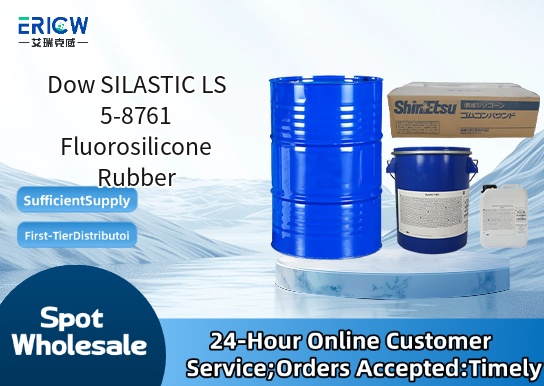
Excellent resistance to fuels, oils, and aggressive hydrocarbon-based chemicals across a wide temperature range.
Outstanding low-temperature flexibility down to –60 °C (–76 °F) combined with thermal stability up to 200 °C (392 °F) for short-term exposure.
Superior compression set resistance, maintaining sealing integrity under prolonged static compression.
Good electrical insulation properties and inherent flame retardancy without halogenated additives.
Ready-to-process liquid silicone rubber (LSR) formulation with platinum-cure chemistry for high reproducibility and minimal post-cure requirements.
Aerospace fuel system seals and gaskets exposed to jet fuels (e.g., JP-4, JP-8) and synthetic lubricants.
Automotive under-hood sensors and connectors requiring chemical resistance in high-temperature engine environments.
Oil & gas downhole instrumentation seals subjected to sour gas (H₂S), crude oil, and aromatic solvents.
Medical device components requiring biocompatibility support and resistance to cleaning agents and sterilants.
Industrial fluid handling systems including valves, diaphragms, and pump components in aggressive chemical service.
| Chemical Type | Fluorosilicone elastomer (FVMQ) |
| Product Form | Two-part liquid silicone rubber (Part A + Part B) |
| Appearance | Translucent, viscous liquid (Part A); translucent, low-viscosity liquid (Part B) |
| Cure System | Pt-catalyzed addition cure |
| Shore A Hardness (Cured) | 55 ± 3 |
| Tensile Strength (Cured) | 7.0–8.5 MPa |
| Elongation at Break (Cured) | 120–160% |
| Primary Applications | Static and dynamic seals, gaskets, and molded components in demanding chemical/thermal environments |
Contact With Us:
E-mail: wangxingqiang@ericwchem.com
Have a Questions? Call Us:
Add:
Building A1, Jiete Industrial Park, Huangpu District, Guangzhou City, Guangdong Province, China