English
 Español
 tiếng việt
 русский
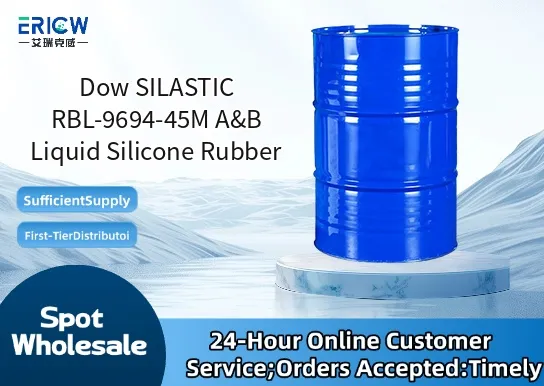
Platinum-catalyzed, two-part addition-cure liquid silicone rubber system for high-precision molding.
Shore A hardness of 45 ± 2, offering an optimal balance of flexibility and mechanical resilience.
Excellent thermal stability with continuous service temperature range from –60 °C to +200 °C.
Low viscosity formulation enables superior flow, fine detail replication, and efficient air release in complex molds.
Meets ISO 10993-5 and USP Class VI biocompatibility requirements for medical device applications.
Medical-grade tubing and catheters requiring kink resistance and smooth surface finish.
Wearable health monitoring components including sensor housings and skin-contact interfaces.
Automotive fluid handling seals and gaskets exposed to elevated under-hood temperatures.
Consumer electronics encapsulation for vibration-damping mounts and protective overmolds.
Food-contact compliant kitchenware components such as baking mats and sealing rings.
| Chemical Type | Platinum-catalyzed addition-cure LSR |
| Product Form | Two-component (A & B) liquid |
| Appearance (Part A) | Translucent off-white liquid |
| Appearance (Part B) | Translucent off-white liquid |
| Shore A Hardness (ASTM D2240) | 45 ± 2 |
| Tensile Strength (ASTM D412) | 8.5 MPa (typical) |
| Elongation at Break (ASTM D412) | 550% (typical) |
| Cure System | Addition cure (no by-products) |
Q1: What is the typical mixing ratio of Part A to Part B for Dow SILASTIC RBL-9694-45M?
A: This two-part LSR system is formulated for a precise 1:1 by weight mixing ratio, ensuring consistent cure behavior and optimal mechanical performance across production batches.
Q2: Is RBL-9694-45M suitable for high-temperature overmolding onto thermoplastics?
A: Yes — its low-viscosity, fast-curing profile and excellent adhesion to common engineering thermoplastics (e.g., PC, ABS, PBT) make it well-suited for automated overmolding processes, including those requiring rapid cycle times and thermal stability up to 200 °C.
Q3: Does this material require post-cure to achieve full physical properties?
A: While RBL-9694-45M achieves functional crosslinking during standard mold curing, a controlled post-cure step is recommended to maximize compression set resistance, thermal stability, and long-term extractables performance—especially for demanding sealing or medical device applications.
Q4: Can RBL-9694-45M be used in applications requiring biocompatibility?
A: This grade is designed with USP Class VI and ISO 10993-compliant raw materials and may be suitable for certain biocompatible applications; however, final regulatory qualification must be performed by the end-user based on specific device design, processing conditions, and intended use.
Contact With Us:
E-mail: wangxingqiang@ericwchem.com
Have a Questions? Call Us:
Add:
Building A1, Jiete Industrial Park, Huangpu District, Guangzhou City, Guangdong Province, China