English
 Español
 tiếng việt
 русский
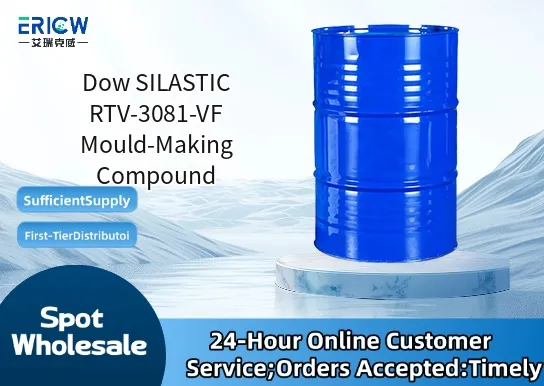
Low-viscosity, pourable two-part platinum-cure silicone system for excellent air release and fine detail reproduction.
Exceptional dimensional stability and low shrinkage (<0.2% after 24 hours at room temperature) ensure high-fidelity mould replication.
Fast demould time — typically 2–4 hours at 25 °C — enabling rapid prototyping and short production cycles.
Excellent tear strength and elongation (>250%) provide durable, reusable moulds even for undercuts and complex geometries.
Non-corrosive, odourless cure with no by-products — ideal for sensitive applications including art casting and food-grade prototyping (when fully cured per specifications).
Industrial prototype moulding for functional testing of plastic, polyurethane, and wax parts.
Artistic and architectural casting of gypsum, concrete, resin, and low-melt metals.
Manufacturing of flexible production tooling for vacuum forming and composite lay-up.
Replication of museum artifacts, heritage objects, and anatomical models requiring surface fidelity and chemical inertness.
Custom encapsulation and potting solutions where thermal stability and electrical insulation are critical.
| Chemical Type | Platinum-cured addition-cure silicone elastomer |
| Product Form | Two-component liquid (Part A: base; Part B: catalyst) |
| Appearance (Uncured) | Translucent, low-viscosity liquids (Part A: water-white; Part B: pale yellow) |
| Mix Ratio by Weight | 10:1 (A:B) |
| Cure Mechanism | Room-temperature or elevated-temperature addition cure |
| Shore A Hardness (7 days @ 25 °C) | 30 ± 2 |
| Tensile Strength (ASTM D412) | 5.5 MPa typical |
| Elongation at Break (ASTM D412) | ≥250% |
Q1: What is the typical cure mechanism and time frame for RTV-3081-VF?
A: RTV-3081-VF is a platinum-catalyzed, addition-cure silicone elastomer that cures at room temperature upon mixing its two components. Full physical property development typically occurs within 24–72 hours, depending on part thickness, ambient humidity, and temperature.
Q2: Is RTV-3081-VF suitable for casting detailed master patterns or low-volume production parts?
A: Yes — it is specifically formulated for high-fidelity mould-making applications, offering excellent detail reproduction, low shrinkage, and good tear resistance, making it well-suited for prototyping, art conservation, and small-batch manufacturing of complex geometries.
Q3: Can RTV-3081-VF be used with common model-making materials such as clay, plaster, or cured epoxy?
A: It generally exhibits good compatibility with non-sulfur-containing substrates. However, sulfur-rich clays, certain pigments, or amine-cured epoxies may inhibit cure; surface testing is recommended before full-scale use.
Q4: Does this compound require post-cure to achieve optimal mechanical properties?
A: Post-curing is not required for basic functionality, but elevated temperature conditioning (e.g., 60–80 °C for several hours) can enhance thermal stability, compression set resistance, and long-term dimensional retention in demanding applications.
Contact With Us:
E-mail: wangxingqiang@ericwchem.com
Have a Questions? Call Us:
Add:
Building A1, Jiete Industrial Park, Huangpu District, Guangzhou City, Guangdong Province, China