English
 Español
 tiếng việt
 русский
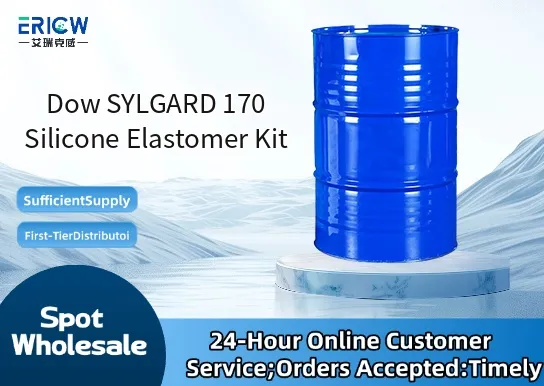
Two-part, platinum-catalyzed silicone elastomer system offering excellent mechanical properties and thermal stability.
Low viscosity before cure enables easy mixing, degassing, and casting into intricate molds.
Cures at room temperature or accelerated with mild heat, providing flexibility in manufacturing processes.
Exceptional electrical insulation properties with low dielectric loss across wide frequency and temperature ranges.
Biocompatibility compliant with ISO 10993-5 (cytotoxicity) and USP Class VI, suitable for medical device prototyping.
Encapsulation and potting of sensitive electronic components, sensors, and LED assemblies.
Prototyping and low-volume production of medical device parts, including wearable interfaces and diagnostic housings.
Soft lithography and microfluidic device fabrication requiring high-resolution replication.
Flexible membrane and diaphragm fabrication for pressure sensors and actuators.
Artificial skin and tactile sensor substrates in robotics and human-machine interface research.
| Chemical Type | Platinum-catalyzed addition-cure silicone elastomer |
| Product Form | Two-component liquid kit (Part A: base polymer; Part B: curing agent) |
| Appearance | Clear, colorless liquids (Part A and Part B separately) |
| Mix Ratio by Weight | 10:1 (Part A : Part B) |
| Cure Mechanism | Platinum-catalyzed hydrosilylation reaction |
| Shore A Hardness (Cured) | 50 ± 5 |
| Primary Applications | Electronics encapsulation, medical device prototyping, soft robotics, microfluidics |
| Key Features | Low shrinkage, excellent transparency, minimal outgassing, non-corrosive cure |
Q1: What is the typical mixing ratio of Part A to Part B?
A: Dow SYLGARD 170 is supplied as a two-part platinum-catalyzed silicone elastomer system with a 10:1 weight ratio of base (Part A) to catalyst (Part B). Accurate weighing and thorough mixing are essential for consistent cure performance and final elastomer properties.
Q2: How does cure speed vary with temperature and thickness?
A: Cure time decreases significantly with increasing temperature — parts typically achieve handling strength within minutes at elevated temperatures (e.g., 60–100 °C), while room-temperature cure may require several hours to days depending on geometry and ambient conditions. Thicker sections may require longer post-cure times to ensure complete through-cure due to heat dissipation limitations.
Q3: Can SYLGARD 170 be used for encapsulation of sensitive electronic components?
A: Yes — SYLGARD 170 is widely selected for electronic encapsulation and potting due to its low modulus, excellent thermal stability, electrical insulation properties, and minimal outgassing after full cure. Its low shrinkage and adhesion to common substrates help mitigate stress on delicate components during thermal cycling.
Q4: Are there any known compatibility or inhibition concerns during processing?
A: Platinum-catalyzed silicones like SYLGARD 170 can be inhibited by certain substances including sulfur-containing compounds, amines, tin-based catalysts, and some organometallics. Surfaces should be clean and free of residues from release agents, adhesives, or prior coatings that may contain inhibiting contaminants. Pre-testing is recommended when combining with other materials.
Contact With Us:
E-mail: wangxingqiang@ericwchem.com
Have a Questions? Call Us:
Add:
Building A1, Jiete Industrial Park, Huangpu District, Guangzhou City, Guangdong Province, China