English
 Español
 tiếng việt
 русский
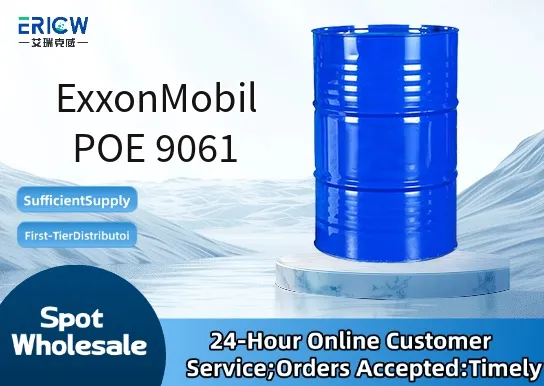
Highly stable polyolester (POE) base fluid engineered for extended service life in demanding refrigeration systems.
Excellent miscibility with HFC, HFO, and hydrocarbon refrigerants—including R-134a, R-1234yf, and R-290.
Superior thermal and oxidative stability under high-temperature compressor operation.
Low volatility and minimal acid formation, supporting long-term system reliability and reduced maintenance frequency.
Formulated to meet stringent OEM specifications for hermetic and semi-hermetic refrigeration compressors.
Hermetic and semi-hermetic compressors in commercial refrigeration units.
Low-temperature cold storage and blast freezer systems.
Mobile air conditioning systems using next-generation low-GWP refrigerants.
Heat pump applications operating with HFC-32 or blended refrigerants.
Industrial process cooling systems requiring high chemical inertness and lubricity.
| Chemical Type | Polyolester (POE) synthetic lubricant |
| Product Form | Liquid |
| Appearance | Clear, amber-colored liquid |
| Primary Applications | Refrigeration and air conditioning compressors |
| Key Features | Refrigerant miscibility, thermal stability, low volatility |
| Benefits | Extended oil life, reduced sludge formation, enhanced compressor protection |
| Typical Viscosity @ 40°C | ~61 cSt (ASTM D445) |
| Typical Viscosity @ 100°C | ~9.8 cSt (ASTM D445) |
Q1: What is ExxonMobil POE 9061 primarily used for?
A: ExxonMobil POE 9061 is a polyolester (POE) synthetic lubricant base fluid designed for use in refrigeration compressors, particularly those operating with HFC, HFO, and natural refrigerants such as R-134a, R-410A, R-32, and R-744 (CO₂). It provides excellent miscibility, thermal stability, and low-temperature fluidity in demanding HVAC&R applications.
Q2: Is POE 9061 compatible with common elastomers and seal materials used in refrigeration systems?
A: Yes, POE 9061 demonstrates good compatibility with typical refrigeration system elastomers—including nitrile (NBR), hydrogenated nitrile (HNBR), and EPDM—when properly selected and validated for the intended operating conditions. Compatibility testing under actual system conditions is recommended prior to full-scale implementation.
Q3: How does POE 9061 compare to other POE fluids in terms of hydrolytic stability?
A: POE 9061 is formulated to offer enhanced resistance to hydrolysis compared to many conventional POEs, supporting longer fluid life in systems where moisture ingress cannot be fully eliminated. However, like all POE fluids, it remains hygroscopic and requires careful handling, storage, and system dehydration practices to maintain performance.
Q4: Can POE 9061 be blended with other lubricants or additives?
A: POE 9061 is intended for use as a base fluid in formulated lubricants. Blending with other lubricants—especially mineral oils or alkylbenzenes—is not recommended without thorough compatibility and performance validation, as it may compromise miscibility, stability, or lubricity. Additive packages must be specifically qualified for use with POE chemistry.
Contact With Us:
E-mail: wangxingqiang@ericwchem.com
Have a Questions? Call Us:
Add:
Building A1, Jiete Industrial Park, Huangpu District, Guangzhou City, Guangdong Province, China