English
 Español
 tiếng việt
 русский
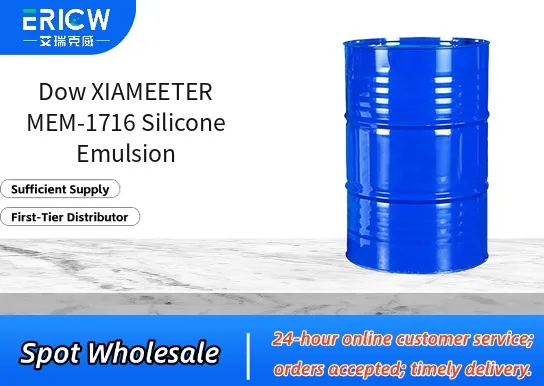
Highly stable anionic silicone emulsion with excellent shelf life and freeze-thaw stability.
Provides superior softness, smoothness, and hydrophobicity to treated substrates.
Low foaming profile suitable for high-shear processing in industrial coating and textile applications.
Compatible with cationic, nonionic, and many anionic systems when properly diluted and stabilized.
Eco-preferred formulation with low APEO content and compliant with major global regulatory frameworks.
Textile finishing for cotton, polyester, and blended fabrics to enhance hand feel and wrinkle resistance.
Leather surface treatment to improve water repellency and tactile softness.
Industrial coatings and paper sizing for improved release properties and surface slip.
Personal care formulations requiring mild, rinse-off compatible silicone conditioning agents.
Nonwoven fabric treatment for hygiene and medical-grade materials requiring breathability and softness.
| Chemical Type | Dimethicone-based anionic silicone emulsion |
| Product Form | Opaque white to off-white liquid emulsion |
| Appearance | Homogeneous, free-flowing liquid |
| pH (1% aqueous solution) | 5.5–6.5 |
| Active Content (wt%) | 30.0 ± 1.0% |
| Viscosity (mPa·s, Brookfield RVT, Spindle #3, 25°C) | 50–150 |
| Particle Size (D50, nm) | 150–300 |
| Storage Temperature Range | 5–35°C |
Q1: What is the primary function of MEM-1716 in coating and ink formulations?
A: MEM-1716 is a non-ionic, anionic-stabilized silicone emulsion designed to provide surface leveling, substrate wetting, and foam control in water-based coatings, inks, and graphic arts systems. It helps reduce surface defects such as craters, orange peel, and pinholes while maintaining compatibility with common acrylic and polyurethane dispersions.
Q2: Is MEM-1716 suitable for use in food-contact compliant applications?
A: MEM-1716 is not pre-certified for direct food-contact applications. Its suitability for such uses depends on full formulation evaluation, regulatory review by the end-user, and compliance with applicable regional regulations. Dow recommends consulting with regulatory experts and conducting appropriate migration or safety assessments before use in food-contact systems.
Q3: How should MEM-1716 be incorporated into a formulation?
A: MEM-1716 is typically added during the let-down or post-addition stage, after high-shear dispersion of pigments and fillers. It should be diluted with water or compatible solvent prior to addition and mixed under moderate agitation to ensure uniform distribution without destabilizing the emulsion system.
Q4: Does MEM-1716 affect the gloss or drying behavior of finished films?
A: At recommended use levels, MEM-1716 generally has minimal impact on final film gloss and does not significantly delay drying or curing kinetics in typical water-based systems. However, excessive dosage may lead to surface migration or reduced intercoat adhesion, so dosage should be optimized per formulation.
Contact With Us:
E-mail: wangxingqiang@ericwchem.com
Have a Questions? Call Us:
Add:
Building A1, Jiete Industrial Park, Huangpu District, Guangzhou City, Guangdong Province, China