English
 Español
 tiếng việt
 русский
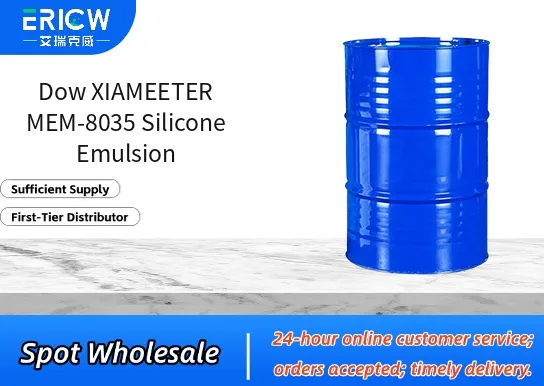
Highly stable anionic silicone emulsion with excellent shelf life and freeze-thaw resistance.
Delivers superior softness, smoothness, and hydrophobicity to treated substrates.
Compatible with common textile auxiliaries including anionic and nonionic agents.
Low foaming profile suitable for continuous pad-batch and exhaust application methods.
Eco-preferred formulation with low APEO content, supporting sustainable textile finishing.
Cotton and cotton-blend fabric softening in garment and home textile finishing.
Knitwear conditioning to enhance drape, hand feel, and sewing performance.
Nonwoven fabric treatment for hygiene products requiring skin-friendly softness.
Denim finishing to improve abrasion resistance and reduce stiffness after stone washing.
Technical textiles requiring durable water repellency without compromising breathability.
| Chemical Type | Anionic polydimethylsiloxane (PDMS) emulsion |
| Product Form | Opaque white liquid emulsion |
| Appearance | Uniform milky dispersion, no phase separation |
| pH (1% aqueous solution) | 5.5 – 6.5 |
| Solids Content (wt %) | 35 ± 1% |
| Viscosity (25°C, mPa·s) | 100 – 400 (Brookfield LV, Spindle #3, 12 rpm) |
| Particle Size (D50, nm) | 80 – 150 |
| Primary Applications | Textile softening, hydrophobization, and surface modification |
Q1: What is the primary function of MEM-8035 in coating and ink formulations?
A: MEM-8035 is a non-ionic, anionic-stabilized silicone emulsion designed to provide surface leveling, substrate wetting, and foam control in water-based coatings, inks, and graphic arts systems. It helps reduce surface defects such as craters, orange peel, and pinholes while enhancing gloss uniformity and substrate coverage.
Q2: Is MEM-8035 compatible with common water-based polymer systems?
A: Yes, MEM-8035 exhibits broad compatibility with acrylics, styrene-acrylics, vinyl acetate copolymers, and polyurethane dispersions. Its stable emulsion profile minimizes the risk of coagulation or viscosity instability when added during let-down or post-addition stages—though compatibility testing under actual formulation conditions is recommended.
Q3: How should MEM-8035 be incorporated into a formulation for optimal performance?
A: MEM-8035 is typically added during the let-down stage after pigment grinding, with gentle mixing to avoid excessive shear. It is generally used at low concentrations—typically ranging from 0.1% to 2% by weight of total formulation—depending on substrate type, film thickness, and desired surface effect. Pre-dilution with water may improve dispersion in highly viscous systems.
Q4: Does MEM-8035 affect the drying or curing behavior of water-based systems?
A: MEM-8035 has minimal impact on water evaporation rate or film formation kinetics. As a non-reactive additive, it remains at the film-air interface and does not interfere with crosslinking mechanisms in coalescing or thermally cured systems. No significant delay in dry-to-touch or through-dry times is observed at recommended use levels.
Contact With Us:
E-mail: wangxingqiang@ericwchem.com
Have a Questions? Call Us:
Add:
Building A1, Jiete Industrial Park, Huangpu District, Guangzhou City, Guangdong Province, China