English
 Español
 tiếng việt
 русский
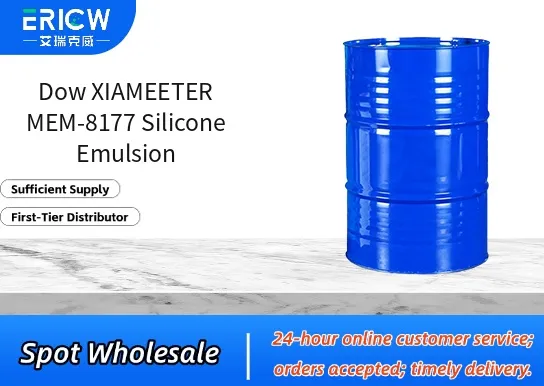
Highly stable anionic silicone emulsion with excellent shelf life under standard storage conditions.
Delivers superior softness, smoothness, and hydrophobicity to treated substrates without compromising breathability.
Compatible with common textile auxiliaries including cationic, nonionic, and low-ionic systems.
Enables easy incorporation into cold-pad-batch and exhaust dyeing processes without phase separation.
Low volatile organic compound (VOC) content, supporting sustainable manufacturing and compliance with global environmental guidelines.
Textile finishing for cotton, polyester, and blended fabrics to enhance hand feel and wrinkle resistance.
Nonwoven fabric treatment in hygiene and medical applications for improved drape and moisture management.
Leather surface conditioning to impart silky touch and abrasion resistance in upholstery and footwear.
Coating additives for paper and board to improve slip, release, and surface uniformity.
Component in personal care formulations requiring mild, skin-compatible silicone delivery (e.g., rinse-off conditioners).
| Chemical Type | Dimethyl silicone polymer emulsion (anionic) |
| Product Form | White to off-white aqueous emulsion |
| Appearance | Opaque liquid, homogeneous, free of visible particles or oil separation |
| pH (1% aqueous solution, 25°C) | 5.5 – 6.5 |
| Active Content (wt%) | 30.0 ± 1.0% |
| Density (25°C, g/cm³) | 0.98 – 1.02 |
| Viscosity (Brookfield LVT, spindle #3, 20 rpm, 25°C) | 200 – 600 mPa·s |
| Freeze-Thaw Stability | Passes 3 cycles (-5°C for 16 h / 25°C for 8 h) |
Q1: What is the primary function of MEM-8177 in coating and ink formulations?
A: MEM-8177 is a non-ionic, anionic-stabilized silicone emulsion designed to provide surface leveling, substrate wetting, and foam control in water-based coatings, gravure and flexographic inks, and overprint varnishes. It helps reduce surface defects such as craters, orange peel, and pinholes without significantly affecting gloss or intercoat adhesion.
Q2: Is MEM-8177 compatible with other common additives like rheology modifiers or biocides?
A: MEM-8177 generally exhibits good compatibility with many standard water-based formulation components, including associative and non-associative thickeners, defoamers, and broad-spectrum biocides. However, due to potential interactions with cationic species or highly reactive crosslinkers, compatibility testing under actual formulation conditions is recommended prior to full-scale use.
Q3: How should MEM-8177 be incorporated into a formulation to ensure optimal performance?
A: For best results, MEM-8177 should be added during the let-down stage—after pigments and primary binders are dispersed—under gentle agitation. Avoid high-shear mixing post-addition to prevent emulsion destabilization. It is typically used at low concentrations, and dosage depends on formulation requirements and desired surface effects.
Q4: Does MEM-8177 contribute to water repellency or anti-blocking properties in dried films?
A: While MEM-8177 is not primarily formulated for durable hydrophobicity or anti-blocking, its silicone migration to the film surface can impart mild water-beading and temporary resistance to blocking—particularly in low-humidity environments and thin-film applications. Long-term performance in these areas depends heavily on film thickness, cure conditions, and co-formulants.
Contact With Us:
E-mail: wangxingqiang@ericwchem.com
Have a Questions? Call Us:
Add:
Building A1, Jiete Industrial Park, Huangpu District, Guangzhou City, Guangdong Province, China