English
 Español
 tiếng việt
 русский
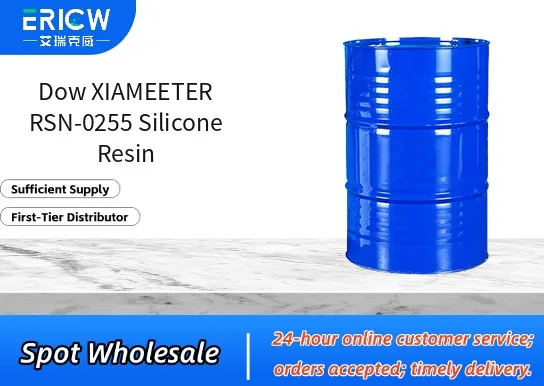
High thermal stability with continuous service temperature up to 200 °C.
Excellent electrical insulation properties, even under high humidity and elevated temperatures.
Good compatibility with organic resins and pigments for hybrid formulation flexibility.
Low surface energy enabling superior water repellency and release performance.
Solvent-based liquid form for easy handling, dilution, and integration into coating and impregnation processes.
Heat-resistant coatings for industrial ovens, exhaust systems, and furnace components.
Electrical insulation varnishes for motors, transformers, and coil windings.
Release agents for composite molding and silicone rubber part demolding.
Weatherable topcoats for architectural metal substrates and signage.
Binders in high-performance ceramic and refractory coatings.
| Chemical Type | Methyl-phenyl silicone resin |
| Product Form | Liquid (solvent-based) |
| Appearance | Clear, colorless to pale yellow viscous liquid |
| Solvent System | Xylene/toluene blend |
| Non-Volatile Content | 50–55 wt% (as supplied) |
| Viscosity (25 °C) | 800–1,200 cP |
| Density (25 °C) | 0.92–0.96 g/cm³ |
| Key Features | Thermal stability, hydrophobicity, dielectric strength, adhesion to metals |
Q1: What is the primary function of Dow XIAMEETER RSN-0255 in coating formulations?
A: Dow XIAMEETER RSN-0255 is a methyl-phenyl silicone resin designed to enhance surface hardness, mar resistance, and thermal stability in high-performance coatings—particularly in industrial and automotive topcoats where durable, low-gloss finishes are required.
Q2: Is RSN-0255 compatible with common organic resin systems such as acrylics or polyesters?
A: Yes, RSN-0255 demonstrates good compatibility with many thermosetting organic resins—including acrylic, polyester, and melamine-based systems—when properly dispersed and integrated during the let-down stage. Compatibility should be verified experimentally for specific formulation chemistries and processing conditions.
Q3: How is RSN-0255 typically incorporated into a coating formulation?
A: It is generally added as a solution in aromatic or high-boiling aliphatic solvents during the grinding or let-down phase. Due to its high functionality and crosslink density, it is typically used at low concentrations—generally ranging from 0.1% to 2% by weight of total formulation—and requires adequate mixing time to ensure uniform dispersion.
Q4: Does RSN-0255 require heat curing to develop its full performance benefits?
A: Yes—RSN-0255 is a thermosetting silicone resin that achieves optimal film integrity, chemical resistance, and thermal stability through thermal crosslinking. Effective cure typically occurs above 120 °C, with performance benefits increasing progressively up to recommended bake temperatures of 140–180 °C depending on substrate and application requirements.
Contact With Us:
E-mail: wangxingqiang@ericwchem.com
Have a Questions? Call Us:
Add:
Building A1, Jiete Industrial Park, Huangpu District, Guangzhou City, Guangdong Province, China