English
 Español
 tiếng việt
 русский
High thermal stability with continuous service up to 250 °C
Excellent electrical insulation properties across wide temperature and frequency ranges
Good adhesion to diverse substrates including metals, ceramics, and cured epoxy composites
Low surface energy enabling effective release and anti-fouling performance
Solvent-based formulation for ease of processing via spray, dip, or roll-coating methods
High-temperature protective coatings for aerospace engine components
Insulating varnishes for electric motor windings and transformers
Matrix resin in heat-resistant composite laminates for industrial tooling
Surface modification layer for ceramic and metal substrates in semiconductor equipment
Binder in high-performance refractory coatings for furnace linings
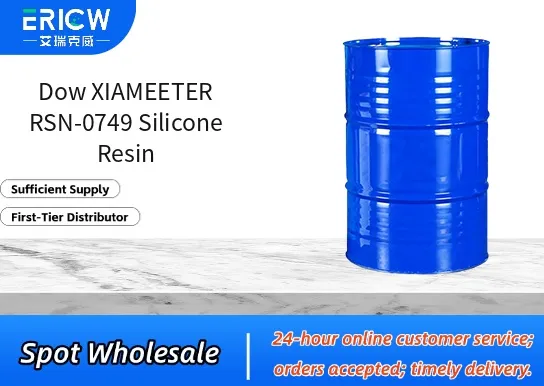
| Chemical Type | Methyl-phenyl silicone resin |
| Product Form | Liquid solution (toluene/xylene blend) |
| Appearance | Clear, colorless to pale yellow liquid |
| Non-Volatile Content (wt%) | 50–55% |
| Viscosity (25 °C, mPa·s) | 800–1,200 |
| Specific Gravity (25 °C) | 0.92–0.96 |
| Flash Point (Tag Closed Cup) | 38–42 °C |
| Key Features | Thermally stable, electrically insulating, substrate-adherent, solvent-processable |
Q1: What is the primary function of XIAMEETER RSN-0749 in coating formulations?
A: XIAMEETER RSN-0749 is a methyl-phenyl silicone resin designed to enhance thermal stability, weather resistance, and surface hardness in high-performance industrial coatings—particularly for metal substrates exposed to elevated temperatures or harsh environmental conditions.
Q2: Is XIAMEETER RSN-0749 compatible with organic resin systems such as acrylics or polyesters?
A: Yes, it demonstrates good compatibility with many thermosetting organic resins—including acrylics, alkyds, and polyester-based binders—enabling hybrid formulations that balance silicone performance benefits with cost-effective processing and film formation.
Q3: How is XIAMEETER RSN-0749 typically incorporated into a coating formulation?
A: It is generally added during the let-down or post-addition stage, dissolved in aromatic or high-boiling oxygenated solvents. Dosage depends on formulation requirements but is typically used at low concentrations to modify film properties without compromising viscosity or cure kinetics.
Q4: Does XIAMEETER RSN-0749 require heat curing to achieve full performance?
A: While it can contribute functionality in ambient-cure systems, optimal thermal stability and crosslink density are realized under elevated temperature curing—typically above 150 °C—making it especially suitable for coil coating, appliance, and automotive OEM applications.
Contact With Us:
E-mail: wangxingqiang@ericwchem.com
Have a Questions? Call Us:
Add:
Building A1, Jiete Industrial Park, Huangpu District, Guangzhou City, Guangdong Province, China