English
 Español
 tiếng việt
 русский
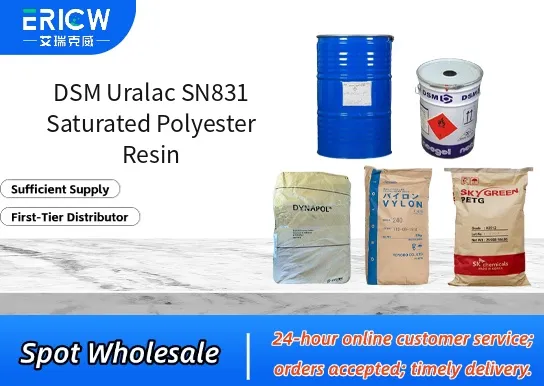
Highly crosslinkable for excellent chemical and solvent resistance in cured coatings.
Low viscosity enables easy formulation with TGIC or hydroxyalkyl amide (HAA) curing agents.
Outstanding gloss retention and color stability under UV exposure and weathering conditions.
Consistent batch-to-batch performance due to tightly controlled molecular weight distribution.
Compliant with major global regulatory frameworks for powder coating resins, including REACH and RoHS.
Architectural aluminum extrusions for façades and window frames.
Automotive exterior trim and non-under-hood components.
Outdoor furniture and garden equipment requiring long-term durability.
White goods (refrigerators, washing machines) and office furniture.
General industrial metal finishing for corrosion protection and aesthetic appeal.
| Chemical Type | Saturated polyester resin for thermosetting powder coatings |
| Product Form | Pale yellow to light amber solid flakes |
| Appearance | Free-flowing, uniform flakes without visible impurities |
| Acid Value (mg KOH/g) | 26–30 |
| Hydroxyl Value (mg KOH/g) | 4–7 |
| Gardner Color | ≤ 3 |
| Melt Viscosity (200 °C, Pa·s) | 25–45 |
| Softening Point (°C, Ring & Ball) | 78–84 |
Q1: What is the primary application of Uralac SN831 in powder coating formulations?
A: Uralac SN831 is specifically designed as a low-viscosity, high-reactivity saturated polyester resin for use in TGIC-free and HAA-based thermosetting powder coatings, particularly where excellent flow, gloss retention, and mechanical durability are required.
Q2: How does Uralac SN831 contribute to curing performance in powder coatings?
A: Its optimized acid value and molecular weight distribution support rapid and uniform crosslinking with common hardeners, enabling efficient curing at standard industrial temperatures—typically between 160–200 °C—with good response to both convection and infrared heating methods.
Q3: Is Uralac SN831 suitable for outdoor applications requiring UV resistance?
A: Yes—Uralac SN831 delivers robust weatherability due to its saturated backbone and low aromatic content, making it well-suited for exterior-grade powder coatings that must maintain color stability and gloss under prolonged UV exposure and environmental stress.
Q4: Can Uralac SN831 be blended with other resins or additives in a formulation?
A: It is fully compatible with standard powder coating components including acrylics, epoxies (in hybrid systems), flow agents, degassing agents, and most common curing co-agents—though compatibility testing is recommended when introducing novel additives or high-loading functional fillers.
Contact With Us:
E-mail: wangxingqiang@ericwchem.com
Have a Questions? Call Us:
Add:
Building A1, Jiete Industrial Park, Huangpu District, Guangzhou City, Guangdong Province, China