English
 Español
 tiếng việt
 русский
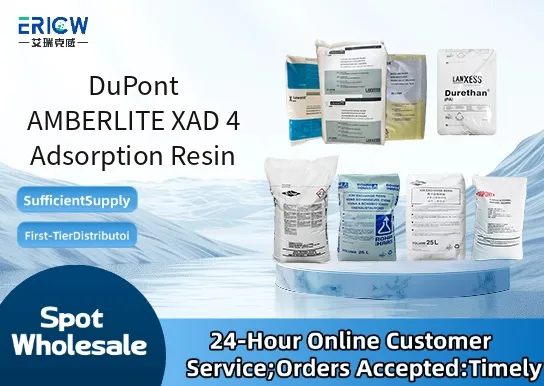
High surface area macroporous polystyrene-divinylbenzene copolymer matrix for efficient adsorption of organic compounds.
Non-ionic, hydrophobic nature enables selective removal of non-polar organics from aqueous streams.
Excellent physical and chemical stability across a broad pH range (0–14) and in common solvents.
Regenerable with mild solvents such as methanol, acetone, or dilute alkali—supporting sustainable process cycles.
Consistent spherical bead morphology ensures low pressure drop and uniform flow distribution in packed beds.
Purification of natural product extracts (e.g., flavonoids, alkaloids, terpenes) in pharmaceutical and nutraceutical manufacturing.
Removal of trace organic contaminants (e.g., pesticides, endocrine disruptors) from drinking water and wastewater.
Concentration and recovery of valuable organic intermediates in fine chemical synthesis effluents.
Pre-treatment step for reverse osmosis systems to protect membranes from organic fouling.
Separation and enrichment of phenolic compounds in food and beverage processing streams.
| Chemical Type | Macroporous non-ionic polystyrene-divinylbenzene copolymer |
| Product Form | Moist, spherical beads |
| Appearance | Off-white to light tan beads |
| Mean Particle Size | 0.4–1.2 mm |
| Surface Area (BET) | 750–850 m²/g |
| Porosity | Macroporous (pore diameter ~100–300 Å) |
| pH Stability Range | 0–14 |
| Maximum Operating Temperature | 120 °C |
Q1: What is the primary chemical composition and structural basis of AMBERLITE XAD 4 resin?
A: AMBERLITE XAD 4 is a non-ionic, macroporous polystyrene-divinylbenzene copolymer resin. Its high surface area and uniform pore structure are engineered for efficient adsorption of organic compounds from aqueous solutions, particularly those with moderate to low polarity.
Q2: How does AMBERLITE XAD 4 differ from other XAD resins, such as XAD 2 or XAD 7?
A: XAD 4 features a higher surface area and narrower pore size distribution compared to XAD 2, making it more effective for adsorbing smaller to medium-sized organic molecules. Unlike the basic acrylic polymer XAD 7, XAD 4 is hydrophobic and styrenic, offering greater stability in acidic or oxidizing environments and enhanced selectivity for non-polar organics.
Q3: Is AMBERLITE XAD 4 suitable for use in food, pharmaceutical, or potable water applications?
A: AMBERLITE XAD 4 is commonly employed in purification processes for food ingredients, pharmaceutical intermediates, and drinking water treatment—subject to compliance with applicable regulatory requirements and proper validation. Users must confirm suitability for their specific application through testing and regulatory review, as DuPont does not pre-approve the resin for direct food contact without customer-specific assessment.
Q4: What regeneration methods are typically used for AMBERLITE XAD 4 after saturation?
A: Regeneration commonly employs low-polarity solvents such as methanol, ethanol, or acetone—often followed by water rinsing. The choice of eluent and regeneration protocol depends on the adsorbed species, process conditions, and required resin performance consistency. Thermal or steam regeneration is generally not recommended due to thermal limitations of the polymer matrix.
Contact With Us:
E-mail: wangxingqiang@ericwchem.com
Have a Questions? Call Us:
Add:
Building A1, Jiete Industrial Park, Huangpu District, Guangzhou City, Guangdong Province, China