English
 Español
 tiếng việt
 русский
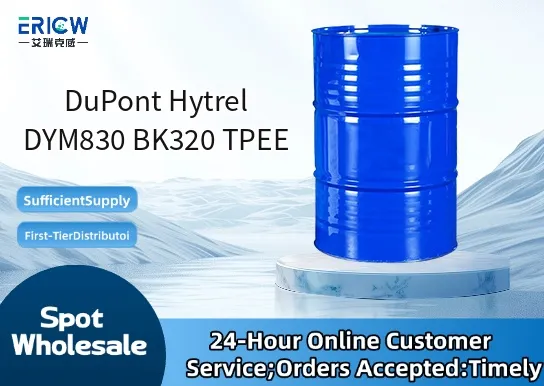
High heat resistance with continuous use up to 150 °C (302 °F) in air.
Excellent mechanical resilience and fatigue resistance over wide temperature ranges.
Outstanding chemical resistance to oils, greases, and many automotive fluids.
Good processability via injection molding and extrusion with low moisture sensitivity.
Black pigment pre-compounded for consistent color and UV stability in demanding environments.
Automotive under-hood components including sensor housings and fluid handling connectors.
Industrial power transmission parts such as timing belt covers and pulley bushings.
Oil and gas downhole tool components requiring high-temperature elastomeric performance.
Consumer appliance parts exposed to elevated thermal and mechanical stress.
Medical device housings where biocompatibility support and sterilization resistance are required.
| Chemical Type | Thermoplastic Polyester Elastomer (TPEE) |
| Product Form | Pellets |
| Appearance | Black, free-flowing pellets |
| Primary Applications | High-temperature dynamic sealing and structural elastomeric components |
| Key Features | Heat resistance, chemical resistance, fatigue endurance, melt-processable |
| Benefits | Replaces thermoset rubber in high-cycle applications; enables lightweight, weldable, recyclable designs |
| Processing Method | Injection molding, extrusion, blow molding |
| Standards Compliance | Meets UL 94 HB flammability rating; RoHS compliant |
Q1: What is the primary functional advantage of Hytrel DYM830 BK320 compared to standard TPEE grades?
A: Hytrel DYM830 BK320 is a pre-colored, black-pigmented thermoplastic elastomer engineered for enhanced UV stability and consistent aesthetic performance in demanding outdoor or exposed applications—without requiring additional colorant compounding or post-processing.
Q2: Is Hytrel DYM830 BK320 suitable for overmolding onto rigid thermoplastics like ABS or polycarbonate?
A: Yes—its balanced melt viscosity and interfacial adhesion characteristics make it well-suited for two-shot injection molding onto common engineering thermoplastics, provided mold temperature, melt temperature, and substrate drying conditions are appropriately optimized per standard Hytrel processing guidelines.
Q3: How does the BK320 designation affect formulation compatibility with additives such as flame retardants or stabilizers?
A: The BK320 grade contains a proprietary carbon-black system optimized for dispersion and thermal stability. While it remains compatible with many common polymer additives, any supplemental additive package should be evaluated for potential interaction with the pre-dispersed pigment system—especially regarding color consistency, rheology, and long-term aging behavior.
Q4: Can Hytrel DYM830 BK320 be recycled within a closed-loop manufacturing process?
A: Yes—like other Hytrel TPEE resins, DYM830 BK320 is fully thermoplastic and can be reprocessed using conventional extrusion or injection molding equipment. However, repeated thermal history may gradually affect mechanical retention and surface appearance, so recyclate content should be controlled and validated for each specific application.
Contact With Us:
E-mail: wangxingqiang@ericwchem.com
Have a Questions? Call Us:
Add:
Building A1, Jiete Industrial Park, Huangpu District, Guangzhou City, Guangdong Province, China