English
 Español
 tiếng việt
 русский
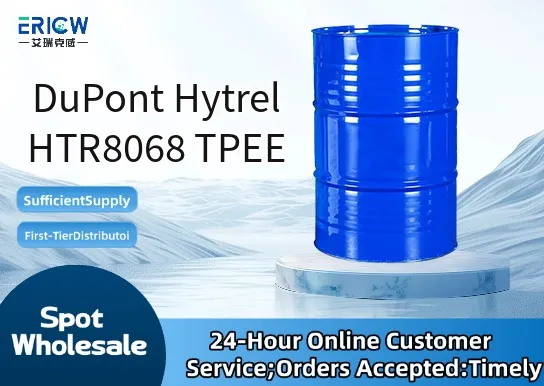
High-temperature resistance with continuous use up to 150 °C
Excellent mechanical resilience and fatigue resistance under dynamic loading
Superior hydrolytic stability—retains performance in humid and hot environments
Broad chemical resistance, including oils, greases, and many automotive fluids
Good processability via injection molding and extrusion without thermal degradation
Automotive under-hood components such as air ducts and sensor housings
Industrial power transmission parts including timing belt teeth and couplings
Consumer appliance components requiring repeated flexing and heat exposure
Oil and gas downhole tool seals and flexible connectors
Medical device tubing and actuation components needing sterilization compatibility
| Chemical Type | Thermoplastic polyester elastomer (TPEE) |
| Product Form | Pellets |
| Appearance | Off-white to light tan, semi-crystalline granules |
| Primary Applications | Dynamic, high-heat mechanical components |
| Key Features | High heat resistance, fatigue endurance, hydrolysis stability |
| Benefits | Extended service life in demanding thermal and mechanical environments |
| Processing Method | Injection molding, extrusion, blow molding |
| Regulatory Compliance | Meets UL 94 HB; RoHS compliant |
Q1: What distinguishes Hytrel HTR8068 from other TPEE grades in the Hytrel portfolio?
A: Hytrel HTR8068 is a high-temperature resistant thermoplastic elastomer engineered for enhanced thermal stability and long-term mechanical retention above 120 °C. It offers superior creep resistance and dimensional stability under continuous thermal load compared to standard Hytrel grades, making it especially suited for under-hood automotive components and demanding industrial applications.
Q2: Is Hytrel HTR8068 compatible with common engineering plastics for co-injection or overmolding?
A: Yes — Hytrel HTR8068 exhibits good adhesion to polyamide (PA6, PA66), polypropylene (PP), and certain PBT formulations when processed under optimized temperature and mold surface conditions. Compatibility should be validated through prototyping, as bond strength depends on substrate treatment, melt temperature alignment, and interfacial cooling rates.
Q3: How does moisture absorption affect processing and final part performance?
A: As a polyester-based TPEE, Hytrel HTR8068 absorbs moisture more readily than polyolefin-based TPEs. Drying at 120 °C for 4–6 hours prior to processing is strongly recommended to prevent surface defects, molecular weight degradation, and reduced tensile retention. Proper drying ensures consistent melt viscosity and optimal mechanical properties in the finished part.
Q4: Can Hytrel HTR8068 be used in applications requiring repeated steam or hot-water exposure?
A: Hytrel HTR8068 demonstrates improved hydrolytic stability relative to conventional TPEEs due to its modified polyester backbone and stabilizer package. It is suitable for intermittent steam sterilization and hot-water cycling in non-critical fluid-contact applications; however, prolonged immersion above 90 °C may gradually affect modulus and elongation — real-world validation under service conditions is advised.
Contact With Us:
E-mail: wangxingqiang@ericwchem.com
Have a Questions? Call Us:
Add:
Building A1, Jiete Industrial Park, Huangpu District, Guangzhou City, Guangdong Province, China