English
 Español
 tiếng việt
 русский
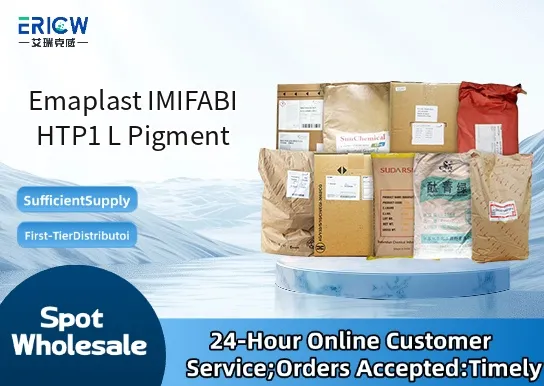
High thermal stability up to 280 °C, enabling compatibility with high-temperature polymer processing.
Excellent dispersion performance in polyolefins and engineering thermoplastics without requiring additional dispersants.
Low migration tendency, ensuring color consistency and reduced surface blooming in end-use applications.
Lightfastness rated at ISO 105-B02 Level 7–8, delivering long-term UV resistance in outdoor applications.
Halogen-free formulation compliant with RoHS and REACH regulatory requirements.
Coloration of polypropylene (PP) and polyethylene (PE) for automotive interior components.
Pigmenting polyamide 6 and 66 in technical textiles and industrial fibers.
Masterbatch production for food-contact-compliant packaging films.
Engineering plastic compounds used in electrical housings and connectors.
High-performance cable jacketing materials requiring thermal and UV stability.
| Chemical Type | High-performance organic pigment dispersion |
| Product Form | Free-flowing granular concentrate |
| Appearance | Uniform dark red-brown granules |
| Primary Applications | Polyolefins, polyamides, PBT, and thermoplastic elastomers |
| Key Features | Thermally stable, low-migration, halogen-free, excellent dispersion |
| Recommended Carrier Resin | PP homopolymer or ethylene-propylene copolymer |
| Typical Loading Range | 1.5–4.0 wt% depending on final shade and polymer matrix |
| Storage Conditions | Store in dry, cool conditions (<25 °C); protect from moisture and direct sunlight |
Q1: What is the primary function of Emaplast IMIFABI HTP1 L Pigment in polymer systems?
A: Emaplast IMIFABI HTP1 L Pigment is a high-temperature stable, heat-resistant pigment masterbatch designed to provide consistent coloration and enhanced thermal stability in engineering thermoplastics—particularly during high-shear compounding and high-melt-temperature processing such as injection molding of polyamides, PBT, and PPS.
Q2: Is this pigment suitable for food-contact or medical-grade applications?
A: Emaplast IMIFABI HTP1 L Pigment is formulated for industrial and technical applications where high thermal performance is required. It is not pre-qualified for regulated food-contact or medical device applications; end-use compliance must be verified by the compounder or converter through full regulatory assessment—including extractables testing and migration evaluation—under applicable regional frameworks.
Q3: How should Emaplast IMIFABI HTP1 L Pigment be incorporated into base resins?
A: This pigment is supplied as a concentrated masterbatch and is typically incorporated via standard melt-blending techniques—such as twin-screw extrusion or high-intensity mixing. It disperses efficiently in polar engineering thermoplastics; optimal dispersion is achieved with adequate residence time, shear history, and temperature control aligned with the host polymer’s processing window.
Q4: Does this pigment offer UV resistance or weathering stability?
A: While Emaplast IMIFABI HTP1 L Pigment delivers excellent thermal stability up to prolonged exposure at elevated temperatures, its inherent UV resistance is moderate. For outdoor or long-term light-exposed applications, additional UV stabilizers or protective topcoats are recommended to maintain color integrity and prevent photodegradation.
Q5: What types of carrier resins are compatible with this pigment masterbatch?
A: The masterbatch is commonly supplied on carriers compatible with high-performance engineering polymers—such as PA6, PA66, or modified PBT. Carrier selection is matched to the target application resin to ensure compatibility, minimize phase separation, and support uniform dispersion without adversely affecting mechanical or rheological properties.
Contact With Us:
E-mail: wangxingqiang@ericwchem.com
Have a Questions? Call Us:
Add:
Building A1, Jiete Industrial Park, Huangpu District, Guangzhou City, Guangdong Province, China