English
 Español
 tiếng việt
 русский
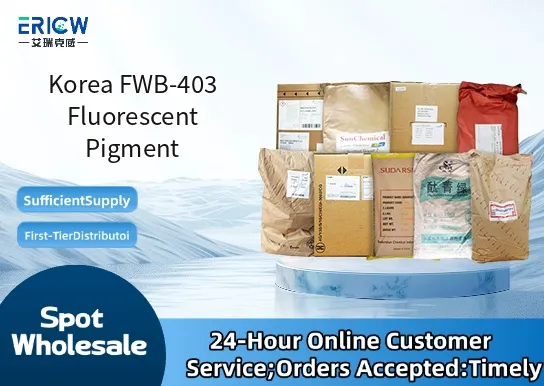
High-intensity fluorescence under UV and daylight illumination.
Excellent thermal stability up to 220°C for processing in thermoplastics and coatings.
Good dispersibility in both polar and non-polar resin systems.
Low migration tendency, ensuring color fidelity in PVC, ABS, and polystyrene matrices.
Compliant with REACH and RoHS directives for restricted substances.
Security printing in banknotes, passports, and tax stamps.
High-visibility signage and safety equipment coatings.
Fluorescent masterbatches for injection-molded plastic parts.
UV-responsive inks for packaging and promotional materials.
Specialty automotive interior trim and dashboard components.
| Chemical Type | Organic fluorescent dye dispersed in polymeric carrier |
| Product Form | Free-flowing granular concentrate |
| Appearance | Bright yellow-green powder (dry) / uniform granules (concentrate) |
| Primary Applications | Plastics, inks, coatings, and security inks |
| Key Features | UV-A excitation (365 nm), strong green emission (~520 nm) |
| Recommended Loading Range | 0.5–3.0 wt% depending on substrate and opacity requirements |
| Storage Conditions | Keep in cool, dry place; avoid direct sunlight and moisture |
| Shelf Life | 24 months from production date under proper storage |
Q1: What types of resin systems is FWB-403 compatible with?
A: FWB-403 demonstrates good compatibility with a broad range of thermoplastic and thermoset systems, including ABS, PS, PC, PET, PMMA, and epoxy resins. It is not recommended for use in highly polar or strongly acidic media without prior compatibility testing.
Q2: How does FWB-403 perform under UV exposure and outdoor weathering?
A: FWB-403 offers moderate UV stability typical of organic fluorescent pigments. For extended outdoor applications, co-stabilization with HALS and UV absorbers is strongly advised to maintain fluorescence intensity and reduce fading.
Q3: What is the recommended dispersion method for optimal fluorescence performance?
A: Achieving full pigment deagglomeration is critical. We recommend high-shear melt compounding or pre-dispersion using three-roll mills or high-speed dispersers. Avoid prolonged thermal exposure above 250 °C during processing to preserve chromophore integrity.
Q4: Is FWB-403 suitable for food-contact or pharmaceutical packaging applications?
A: FWB-403 is not certified for direct food-contact or pharmaceutical use. Its suitability for indirect contact applications must be evaluated case-by-case, considering regulatory requirements in the target market and full formulation compliance.
Contact With Us:
E-mail: wangxingqiang@ericwchem.com
Have a Questions? Call Us:
Add:
Building A1, Jiete Industrial Park, Huangpu District, Guangzhou City, Guangdong Province, China